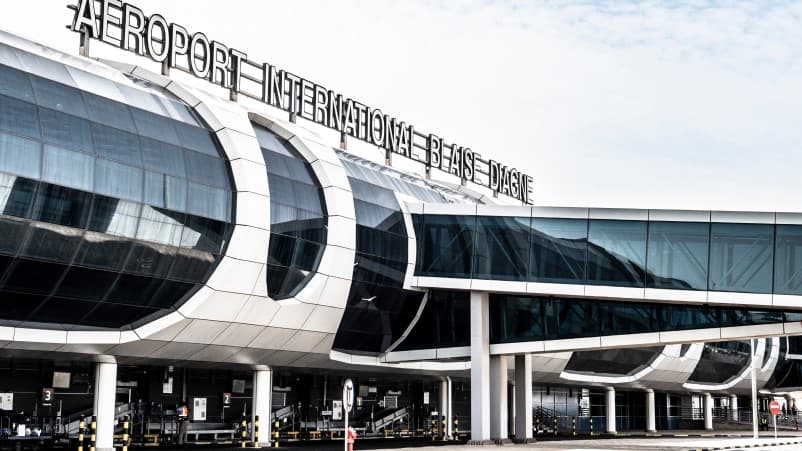
Air Transat has announced that its nonstop Montreal–Dakar service will become a year-round operation, a significant shift from its previous seasonal schedule. Launched in June 2026, the route will now maintain at least one weekly flight during the winter season, ensuring continuous connectivity between Canada and Senegal. The winter program, running every Friday from October 30, 2026, to March 26, 2027, will be operated with an Airbus A330-200 configured in two classes: 12 Club Class seats in a 2-2-2 layout and 334 Economy seats in a 3-3-3 arrangement. This winter frequency will complement the two weekly rotations already scheduled for the summer season.
This route holds a unique position in the North American market: it is the only direct air link between Canada and sub-Saharan Africa. For the Senegalese diaspora in Quebec, the year-round service provides greater predictability for family and professional travel, eliminating the seasonal gaps that previously forced connections through Europe or the United States. For leisure travelers, Dakar serves as a gateway to West Africa, with easy connections to regional destinations such as Cape Verde. The decision to extend the service reflects Air Transat's commitment to strengthening its long-haul network while catering to both VFR (visiting friends and relatives) and leisure demand.
In parallel, Air Transat is expanding its winter sun network from Canadian regional airports, with a particular focus on Mexico. Starting December 19, 2026, the airline will launch a new weekly nonstop service between Windsor (YQG) and Cancún (CUN), operating every Saturday until April 25, 2027. This complements Windsor's existing Punta Cana service, offering more choices for local travelers. Additionally, the Fredericton (YFC)–Cancún route, inaugurated the previous winter, will be renewed and extended for the 2026–2027 season, running from December 16, 2026, to April 29, 2027, with weekly Wednesday flights. These additions underscore a broader strategy to provide direct access to popular beach destinations from secondary Canadian cities, reducing the need for connections through major hubs.
For aviation training students, this news illustrates key industry trends: the importance of VFR traffic in sustaining long-haul routes, the strategic use of widebody aircraft on thin but profitable markets, and the growing role of regional airports in network planning. Air Transat's decision to operate the A330-200 on the Dakar route highlights how airlines match aircraft capacity to demand, balancing premium and economy seating. The expansion into secondary airports also demonstrates how carriers identify underserved markets and deploy capacity to stimulate demand, a concept central to airline route planning and revenue management.
From an operational perspective, the year-round Montreal–Dakar service requires careful scheduling, crew planning, and maintenance coordination, especially during the winter season when weather disruptions can affect transatlantic operations. For ATC students, the route adds to the complexity of transatlantic traffic management, with flights crossing oceanic airspace and requiring precise coordination between Canadian and Senegalese air traffic control. Understanding these operational realities is essential for future pilots and controllers who will manage such flights in their careers.