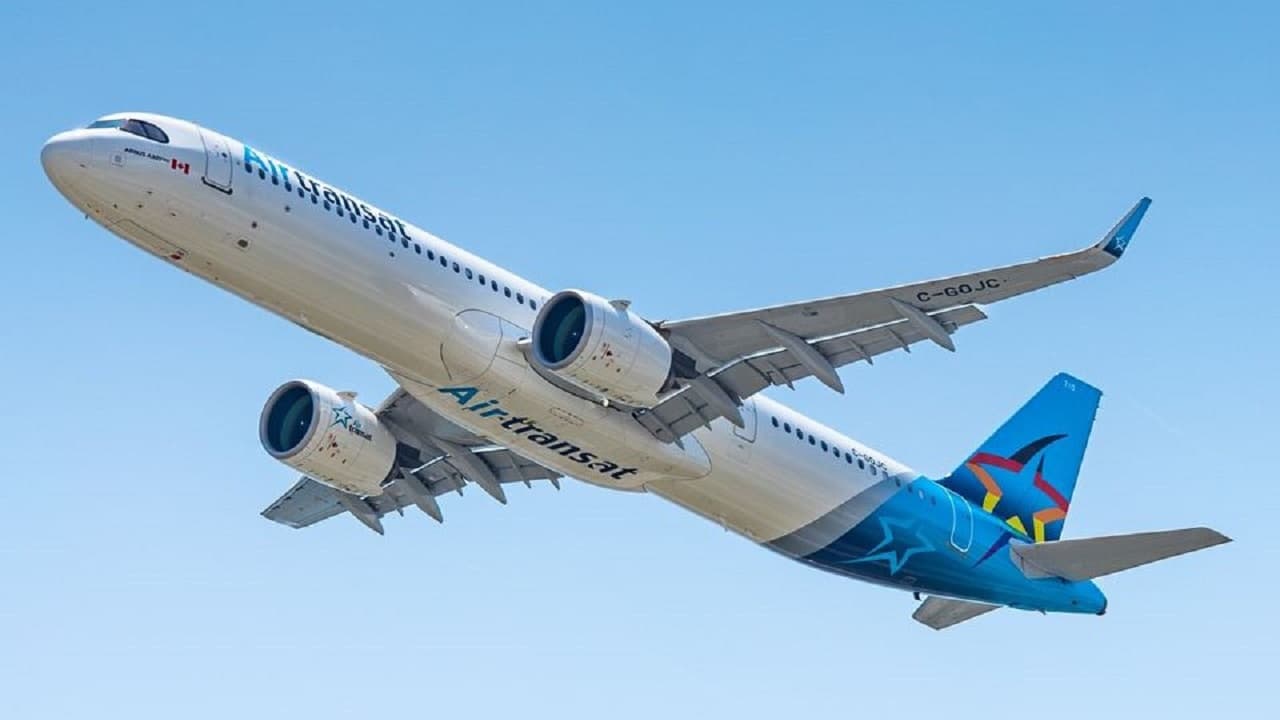
Air Transat, the Canadian leisure carrier, has significantly expanded its transatlantic network with the launch of four new seasonal routes connecting Canada to Europe, Africa, and the North Atlantic. These additions, announced as part of the airline's summer 2026 program, underscore its strategy to become a specialist in long-haul leisure travel while relying on its partnership with Porter Airlines for domestic and transborder services.
Starting this week, Air Transat operates a weekly non-stop flight from Toronto Pearson to Tirana, Albania, using an Airbus A330-200. This service, available every Thursday until October 8, 2026, marks the first direct air link between North America and Albania. From Montreal-Trudeau, three new summer routes have been inaugurated: Montreal to Dakar, Senegal, with up to two weekly flights on an Airbus A321LR until October 18, 2026; Montreal to Reykjavik, Iceland, with up to two weekly frequencies on an Airbus A320 until September 20, 2026; and Montreal to Agadir, Morocco, with a weekly flight every Friday until October 23, 2026, also on an A321LR. These routes complement previously announced services like Quebec City to Marseille and Ottawa to London Gatwick, while the planned Toronto-Accra route has been canceled.
This expansion is part of Air Transat's largest summer program ever, featuring eight new international routes and increased frequencies on key axes. The airline emphasizes "targeted high-value routes" that allow it to be a pioneer in underserved markets, such as the first direct Canada-Albania service and the first non-stop flight from Canada to sub-Saharan Africa. For ATPL and ATC students, this case study illustrates how airlines balance seasonal demand, aircraft utilization, and network optimization. The use of different aircraft types—A330-200 for Tirana, A321LR for Dakar and Agadir, and A320 for Reykjavik—highlights the importance of range and capacity planning in long-haul operations.
Air Transat's strategic shift also involves a deeper partnership with Porter Airlines. Since 2024, the two carriers have offered combined itineraries: Air Transat focuses on international flights from its hubs in Montreal, Quebec City, and Toronto, while Porter handles domestic and transborder routes to destinations like Boston, Chicago, New York, and Los Angeles. This alliance allows Air Transat to streamline its network, feeding passengers from Porter's flights into its long-haul services. For ATC students, this interline cooperation demonstrates how air traffic flow management must adapt to changing airline networks, especially during peak summer seasons.
France remains a key market for Air Transat, which claims to be the largest carrier between Canada and France in summer, offering 25% of available capacity. From Montreal, it operates multiple daily flights to Paris-CDG plus seasonal services to Bordeaux, Lyon, Marseille, Nantes, Nice, and Toulouse. Quebec City has regular flights to Paris and a new weekly service to Marseille, while Toronto connects to Paris with expanding frequencies. A TGV AIR partnership with SNCF enables seamless connections to French cities. This dense network provides a practical example for ATPL students studying route planning, slot coordination, and seasonal capacity management.