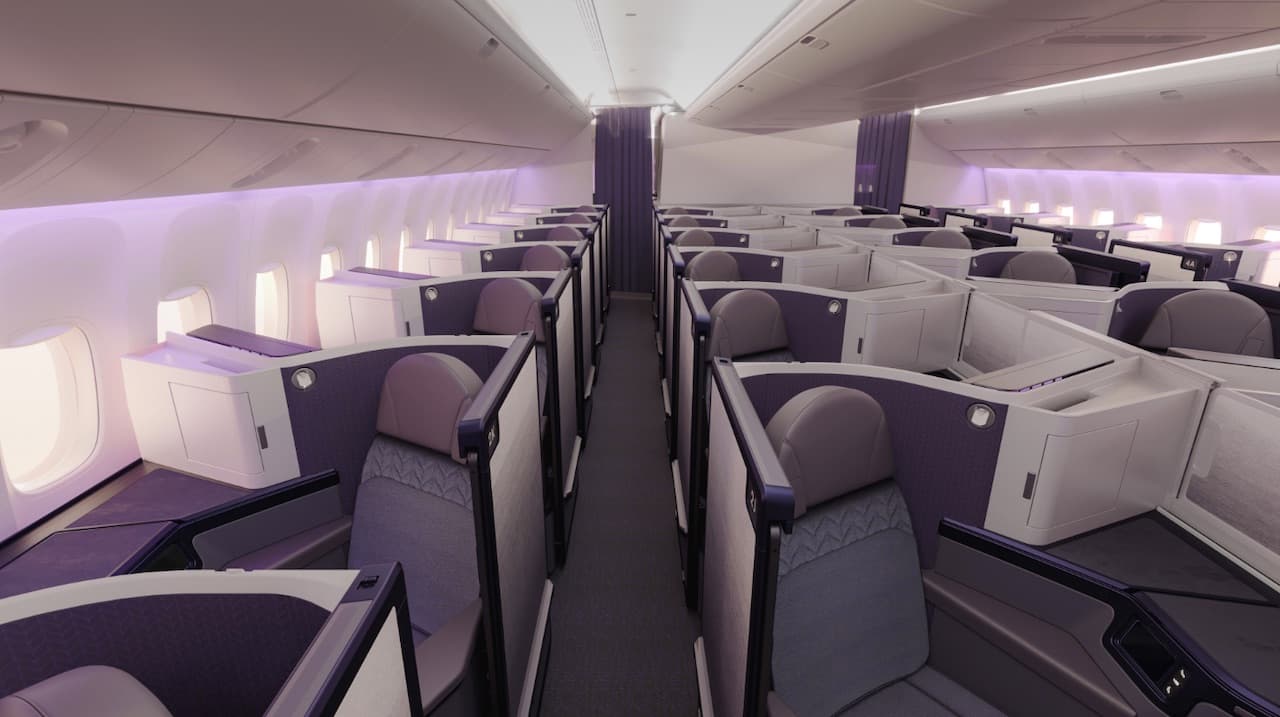
Air New Zealand has announced a comprehensive cabin retrofit for its Boeing 777-300ER fleet, scheduled to begin in 2027. The upgrade will bring the 777-300ER cabins in line with the recently refurbished 787-9 Dreamliners, ensuring a consistent premium experience across the airline's long-haul network. This initiative is part of the carrier's largest cabin overhaul in nearly two decades, aimed at extending the service life of its 777s while reducing maintenance burdens from aging interiors.
**Business Premier Upgrade**
The centerpiece of the retrofit is the adoption of the Collins Elevation seat in Business Premier, configured in a reverse herringbone layout. This design places seats angled toward the windows, offering enhanced privacy and direct aisle access. The 44 Business Premier seats will feature a 43-inch pitch, full-flat bed conversion, sliding privacy doors, 18-inch entertainment screens with Bluetooth audio, and USB-A/USB-C connectivity. This mirrors the premium product already introduced on the 787-9, providing a seamless experience for passengers switching between aircraft types.
**Economy and Premium Economy Adjustments**
In Economy, the cabin will gain two additional seats, bringing the total to 246, while overall aircraft capacity remains at 342 seats due to a slight reduction in Premium Economy from 54 to 52 seats. New ergonomic ZIM seats will be installed, featuring 13-inch personal screens with Bluetooth and USB-C ports. The airline will offer an "Economy Stretch" option with 35-inch pitch for extra legroom, alongside standard 31-32 inch pitch. Notably, the popular Skycouch rows—where three economy seats convert into a flat lounging surface—will be retained across 16 rows, preserving a unique selling point for leisure travelers.
**Strategic Context and Timeline**
The first 777-300ER is slated to enter the retrofit hangar in March 2027, with entry into service expected by May 2027. The fleet-wide rollout will follow progressively. This investment underscores Air New Zealand's commitment to its 777 fleet as a backbone of international routes, particularly connecting Europe, the Americas, and the Pacific. By standardizing cabin products across both the 777 and 787 fleets, the airline aims to improve operational efficiency, passenger satisfaction, and brand consistency.
**Implications for Aviation Training**
For ATPL and ATC students, this retrofit highlights the importance of fleet commonality in modern airline operations. Understanding how cabin configurations affect weight and balance, emergency procedures, and passenger flow is critical. The introduction of new seat types and layouts may also influence future aircraft certification and maintenance training, as airlines increasingly seek to extend the life of existing widebody aircraft through major cabin upgrades rather than new purchases.