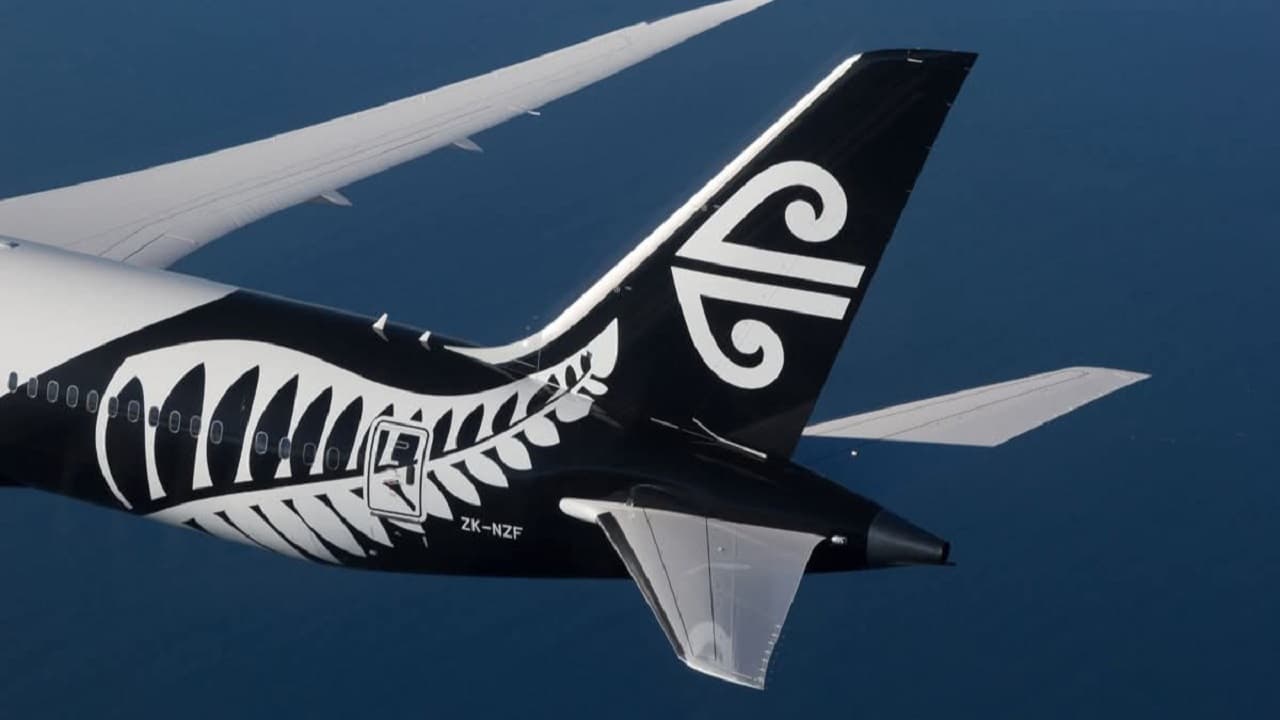
**Air New Zealand has successfully returned its last stored Boeing 787-9 Dreamliner to commercial service**, marking the end of a challenging period of fleet constraints driven by the global shortage of Rolls-Royce Trent 1000 engines. The aircraft, registered ZK-NZD, had been parked at Asia Pacific Aircraft Storage in Alice Springs, Australia, since September 2025 for engine maintenance. It departed Alice Springs on June 28, 2026, arrived in Auckland, and resumed commercial flights on June 30, initially serving San Francisco and later regional destinations such as Rarotonga, Nadi, Brisbane, and Perth.
**For the first time since the Trent 1000 crisis began**, Air New Zealand has no wide-body aircraft in storage. At the peak of the disruption, five of its fourteen 787-9s were grounded. According to Baden Smith, the airline's fleet general manager, this milestone is a step toward full Dreamliner recovery. "With the completion of our retrofit program and the delivery of two new Boeing 787-9s by the end of the year, we will see targeted growth in our long-haul capacity over the next two years," he said, adding that all existing 787s will receive new cabins by the end of 2026.
**The logistics of storing and maintaining aircraft in the Australian desert** were complex. Robert Cox, fleet project manager at Air New Zealand, explained that the challenge was not just finding storage space but also preserving the fleet and progressing engine overhauls. "Performing engine changes at Alice Springs was a significant logistical challenge, but it allowed us to send engines to the workshop at least six months earlier than if they had remained on the aircraft," he noted. The dry desert climate was chosen over New Zealand's humid conditions, which are less suitable for long-term storage.
**This operational recovery directly supports Air New Zealand's network expansion** from Christchurch, the main airport on the South Island. In May 2026, the airline announced three new seasonal non-stop routes: Singapore (starting October 28, 2026), Tokyo-Narita (November 28, 2026), and Perth (November 30, 2026), all operated by Dreamliners. These routes were made possible by the increased availability of long-haul aircraft. While the long-haul situation is normalizing, the airline still faces constraints on its medium-haul fleet, with only two Airbus A320neos currently grounded due to Pratt & Whitney engine issues, down from six at the peak.
**For ATPL and ATC students, this case study illustrates real-world fleet management challenges**—engine reliability, maintenance logistics, and the ripple effects on network planning. Understanding how airlines manage engine crises and storage decisions is directly relevant to operational decision-making in aviation careers.