**A Tragedy Under the Microscope**
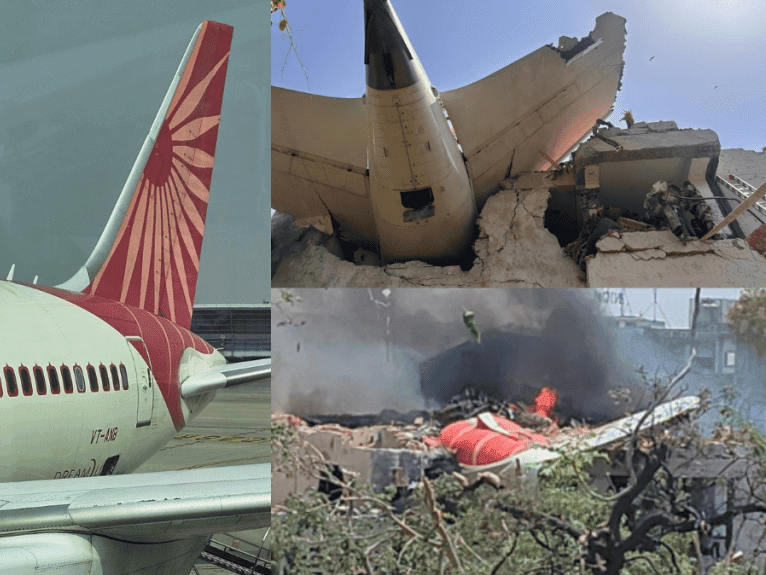
Less than a year after the crash of Air India flight AI171 in Ahmedabad, which killed 260 people in June 2025, the Indian aviation industry is bracing for the final report from the country's Aircraft Accident Investigation Bureau (AAIB), expected by June 2026. The Boeing aircraft, operating the Ahmedabad–London route, crashed seconds after takeoff. The preliminary report pointed to a sudden fuel cutoff to both engines, possibly due to manipulation of fuel cutoff switches, with a protective device potentially failing. For ATPL and ATC students, this case is a stark reminder of how a single system failure or human error can cascade into catastrophe. The investigation has not yet ruled out maintenance issues, design vulnerabilities, or deliberate action, making it a rich case study for accident analysis modules.
**A Carrier in Crisis**
Air India's troubles extend far beyond the crash. According to Bloomberg, the airline posted a staggering $2.4 billion loss for the fiscal year ending March 2026, making it the worst-performing entity in the Tata Group portfolio. CEO Campbell Wilson resigned before his term ended in April 2026, leaving a strategic vacuum. Experts quoted by the BBC highlight a gap between the airline's ambitious five-year turnaround plan and its actual execution. For ATPL students studying airline management and ATC trainees learning about operational oversight, this illustrates how financial instability can erode safety culture and maintenance standards. The DGCA's 2025 audit found 51 safety violations, seven of them critical — a red flag for any aspiring aviation professional.
**Operational and Regulatory Lessons**
Beyond finances, Air India's operational reliability is under scrutiny. In March 2026, a Delhi–Vancouver flight had to turn back after nearly eight hours because it lacked regulatory clearance to enter Canadian airspace — an extremely rare event in modern commercial aviation. Such incidents underscore the importance of NOTAMs, airspace coordination, and regulatory compliance, core topics for both ATPL and ATC training. Additionally, geopolitical tensions have forced route diversions, increasing fuel costs and flight times. The ongoing ban on overflying Pakistan adds another layer of complexity. These real-world constraints are exactly what future pilots and controllers must learn to navigate.
**What This Means for Training**
For ATPL candidates, the AI171 crash highlights the criticality of fuel system knowledge, emergency procedures, and the human factors behind switch manipulation. For ATC students, it emphasizes the need for strict adherence to clearance protocols and the cascading effects of airspace restrictions. The upcoming AAIB report will likely trigger new regulatory requirements, making this a living case study for safety management systems (SMS) and accident prevention. MyATPS students should follow this story closely — it is not just news, but a textbook example of how systemic failures can bring down an airline.
**Conclusion**
Air India's crisis is a multifaceted lesson in aviation safety, management, and regulation. As the final report approaches, ATPL and ATC trainees have a unique opportunity to analyze a real-world accident and its broader implications. Understanding these dynamics is essential for building a career in aviation, where safety is never negotiable.