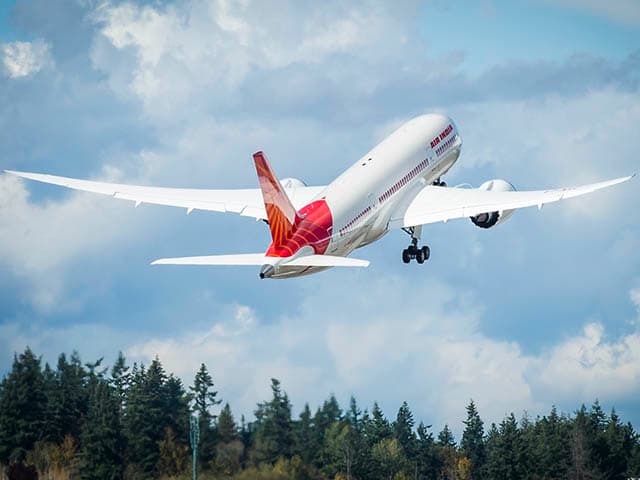
The investigation into the Air India AI171 crash has taken a new turn. Indian authorities have decided to send a fuel control switch module from a Boeing 787-8 Dreamliner to the United States for expert analysis, following a similar incident in February 2026 that reignited suspicions of a potential mechanical defect. This decision comes nearly a year after the deadly crash that killed 260 people in Ahmedabad.
On February 2, 2026, an Air India Boeing 787-8 Dreamliner (registration VT-ANX) was preparing for a flight from London Heathrow to Bangalore. During engine start-up before departure, the crew noticed abnormal behavior of the left engine fuel control switch. The selector would not stay locked in the "RUN" position and slid toward "CUTOFF," threatening an in-flight engine shutdown. After a flight that ultimately proceeded without major incident, the aircraft was immediately grounded upon arrival in Bangalore.
According to documents reviewed by Reuters, India's Directorate General of Civil Aviation (DGCA) plans to send officials to Seattle to oversee tests conducted by Boeing on the fuel control module removed from VT-ANX. This move comes despite initial findings by the DGCA and Boeing in February, which concluded that "the switch functioned mechanically in accordance with its design" and that the module was "fully functional." Air India justified the new examination as "a precautionary measure to ensure a thorough and conclusive assessment."
The initiative takes on particular significance in light of the June 12, 2025, disaster, when Air India flight AI171 crashed seconds after takeoff from Ahmedabad, killing 260 people. The preliminary report from India's Aircraft Accident Investigation Bureau (AAIB), published in July 2025, revealed that the fuel control switches of both engines were moved almost simultaneously to the "cutoff" position shortly after takeoff, causing a sudden loss of power. However, investigators have not yet determined whether this was due to human error, a technical defect, or a failure of the locking mechanism designed to prevent accidental manipulation.
In September 2025, families of four victims filed a lawsuit in the United States against Boeing and Honeywell, the manufacturer of the fuel switches (part number 4TL837-3D). The lawsuit alleges that "the locking mechanism of the fuel selector in the cockpit could be inadvertently disengaged." The plaintiffs accuse both companies of negligence, claiming they were aware of the risk as early as 2018, when the U.S. Federal Aviation Administration (FAA) issued a notice highlighting potential locking disengagement issues on several Boeing models, including the 787. Notably, the FAA stated that this issue did not constitute "an unsafe condition warranting an Airworthiness Directive" but only a recommendation for inspection.
Following the preliminary report in July 2025, the DGCA ordered inspections of fuel control switches on all Boeing 787 and 737 aircraft operating in India, with a deadline of July 21, 2025. Air India stated it had conducted checks across its entire 787 fleet without detecting any issues. Meanwhile, the FAA maintained its position that Boeing's fuel switches "are safe" and do not require an airworthiness directive. FAA Administrator Bryan Bedford even stated in July 2025 that it was "highly improbable" that a mechanical anomaly in the fuel control system caused the accident.
The sending of this module to the United States for additional testing reflects persistent doubts among Indian authorities about the reliability of the Boeing 787's fuel switch locking system. This step could provide crucial evidence in the investigation into the AI171 crash, as victims' families await definitive answers about the exact causes of the disaster—the first fatal accident involving a Boeing 787 since its entry into service in 2011.