Air France reroutes Atlantic flights to cut contrail climate impact
Flight trials under the European CICONIA project demonstrate that targeted tactical rerouting over the North Atlantic significantly lowers non-CO2 aviation warming.
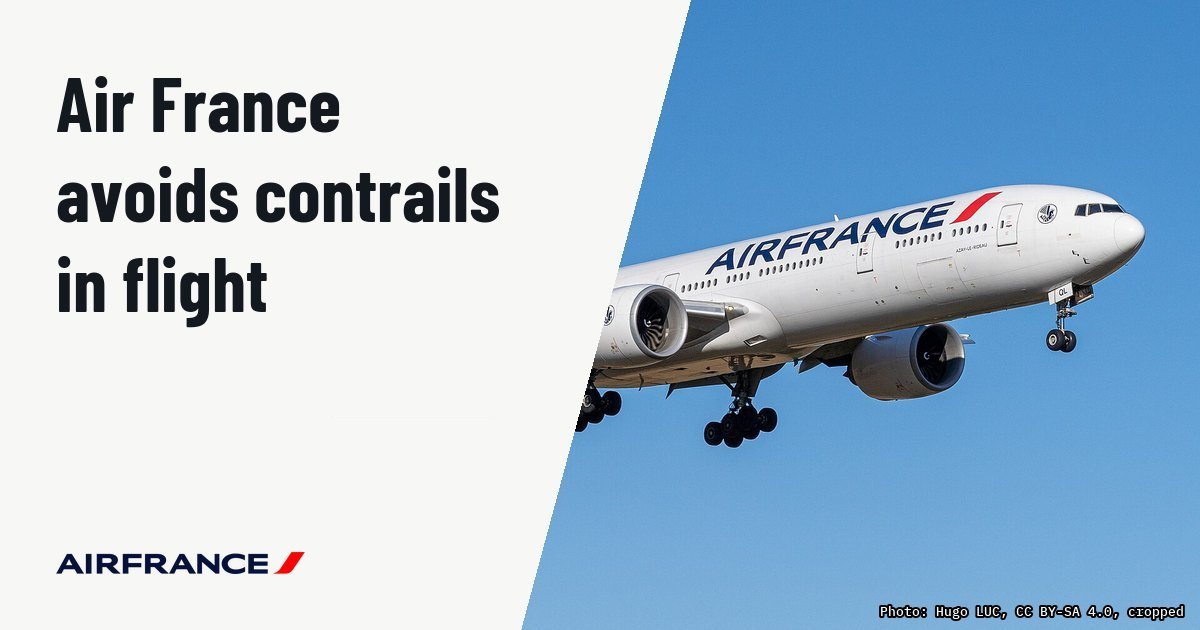
During flight trials conducted between February and April 2026 within the SESAR JU CICONIA project, Air France evaluated operational strategies to mitigate non-CO₂ atmospheric effects across nearly 4,300 North Atlantic commercial flights.
The evaluation identified 245 flights operating through atmospheric regions prone to persistent contrail formation. Dispatchers calculated alternative flight paths for these services, ultimately rerouting 130 flights with air traffic control approval. The findings demonstrate that contrail formation is highly concentrated, with only 3% of monitored flights generating 25% of the overall contrail-induced climate impact.
For aircraft operated on modified trajectories, contrail climate warming dropped by 57%, translating into a 36% reduction in total flight climate impact. Over the entire trial scope, contrail warming decreased by 8%, an environmental benefit evaluated at roughly 22,000 tonnes of CO₂ equivalent. Implementing these flight profile modifications requires close coordination with ATC while reconciling non-CO₂ mitigation with core safety and network efficiency requirements outlined in the European ATM Master Plan.
Why it matters for your training
Tactical flight level and route adjustments to avoid persistent contrails will increasingly influence oceanic flight planning and ATC clearance coordination for long-haul crews.
Sources
Article rewritten with the help of AI from the cited sources.