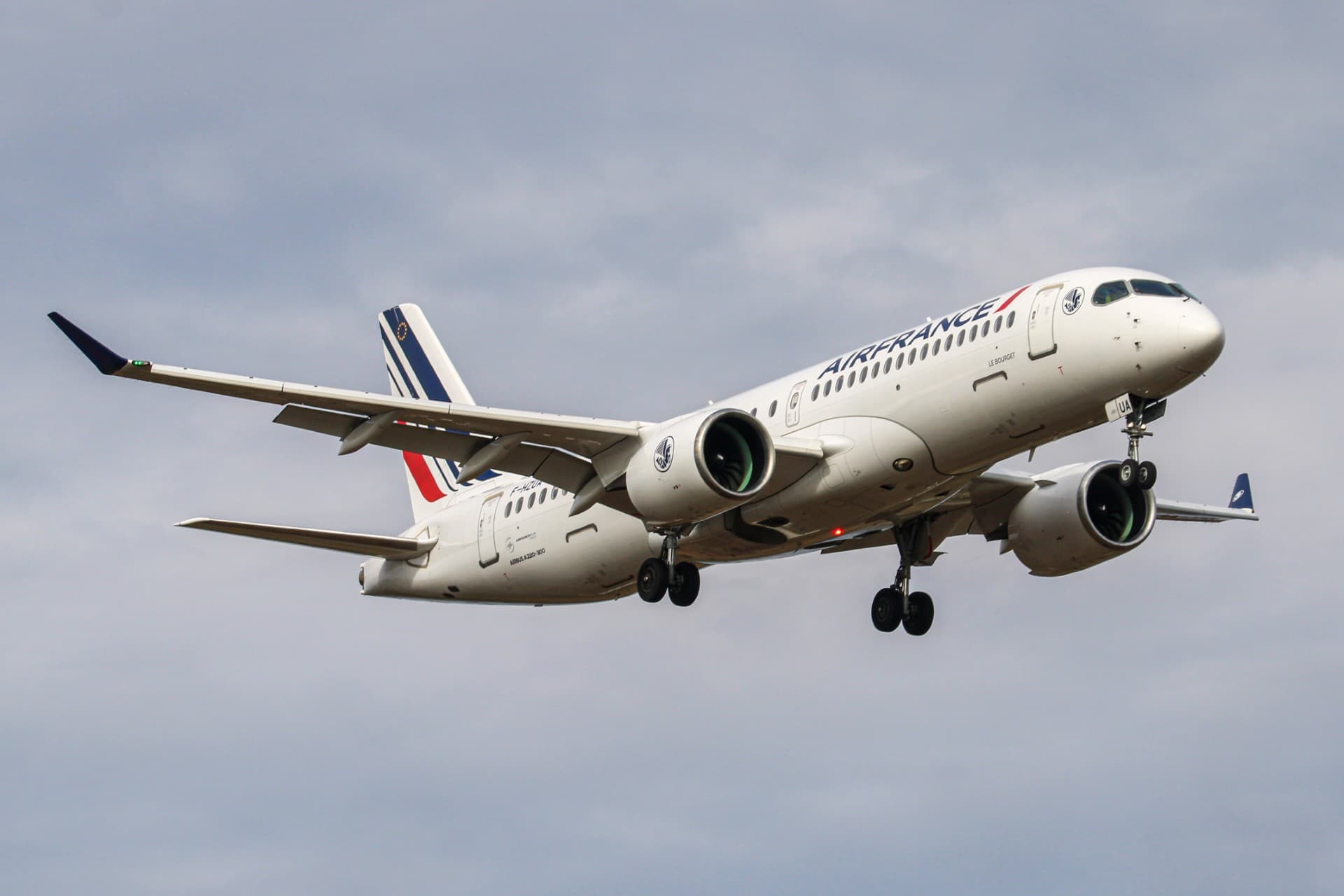
Air France has announced the reopening of its Cadet pilot training program, a unique initiative among major European airlines that provides fully funded training for aspiring airline pilots. The program covers the entire cost of a two-year curriculum, including the ATPL theoretical phase, flight training, and simulator sessions, leading directly to a first officer position on modern narrow-body aircraft such as the Airbus A220, A320 (Air France) or Boeing 737 and A320neo (Transavia). Applications will be accepted from June 15 to July 31, 2026, via Air France's recruitment website.
For ATPL and ATC students, this news is highly relevant. The Cadet program represents an alternative pathway to the traditional ENAC or private flight school route, which can cost between €60,000 and €100,000. By offering fully funded training, Air France removes the financial barrier that often prevents talented candidates from pursuing a career as an airline pilot. The selection process is rigorous, involving online pre-screening, psychotechnical and psychomotor tests, and individual and group interviews, similar to the PSY1/PSY2 standards used at ENAC. Candidates must be EU/EEA or Swiss nationals, fluent in French and English, hold a scientific bac+2 level qualification (or equivalent), and pass a Class 1 medical exam. No formal age limit is imposed, though a coherent professional project and strong motivation are required.
The training itself is structured in blocks: nine months of ATPL theory, followed by 15 to 21 months of flight training on light aircraft (TB10, TB20, CAP 10C, Velis Electro) and twin-engine aircraft (BE58NG), plus glider flying, before moving to A320 or B737 simulators for multi-crew cooperation. The program totals approximately 150 flight hours and 80 simulator hours. Since its relaunch in 2018, over 300 cadets have joined Air France and Transavia cockpits. The company also emphasizes diversity, noting that 25% of selected cadets in 2025 were women.
For ATC students, understanding the Cadet program is valuable because it illustrates how airlines are addressing pilot shortages and shaping the future workforce. The program's emphasis on multi-crew cooperation and simulator-based training mirrors the teamwork and communication skills essential in ATC operations. Moreover, the selection criteria—including English proficiency and psychometric testing—highlight competencies that are equally critical for air traffic controllers. This initiative also reflects broader industry trends: airlines investing in talent pipelines to ensure a steady supply of qualified pilots, which in turn affects traffic management and operational planning.
In summary, Air France's Cadet program is a game-changer for aspiring pilots, offering a debt-free path to the flight deck. For ATPL students, it represents a realistic, funded route to a professional license. For ATC trainees, it provides insight into airline recruitment strategies and the importance of cross-crew competencies. The June 23 webinar, organized with the FFA and FFVP, will offer further details for interested candidates.