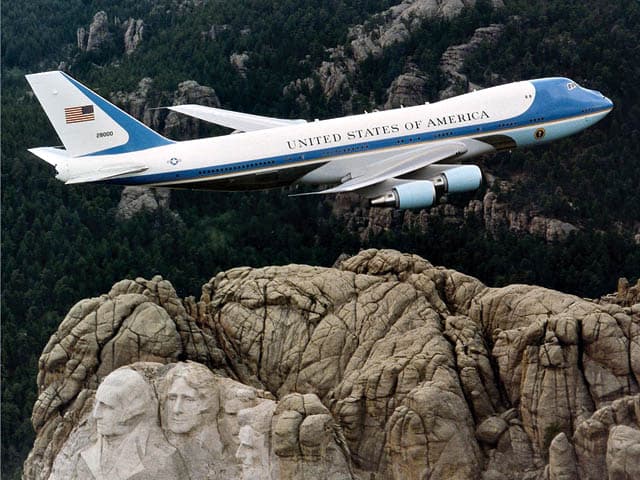
The replacement of the two presidential Boeing 747-200 aircraft, known as the VC-25B program, is facing increasingly severe delays. A Pentagon document prepared for the fiscal year 2027 budget highlights persistent setbacks in the definition and certification of the cabin interior, which are now cascading into wiring, structural modifications, and test preparations. Despite these challenges, Boeing maintains its goal of delivering the first aircraft in 2028.
The VC-25B is not just a VIP transport; it is a flying command post designed to carry the U.S. president under any circumstances. The program requires a presidential cabin, secure communications, military avionics, self-protection systems, enhanced electrical power, and the ability to operate with increased ground autonomy. This complex specification explains part of the difficulty. However, the interior fit-out, already weakened by a supplier change after the contract with GDC Technics was terminated in 2021, remains behind schedule. According to the report, "the design maturity of the aircraft interior continues to lag due to numerous technical and certification issues."
This lag is not confined to the cabin; it propagates to the definition and fabrication of the Electrical Wiring Interconnection System (EWIS) and structural work. As a result, studies must be redone, and already-modified elements are affected again by design changes—a particularly punishing cycle for such a complex conversion. Additionally, the two 747-8s require work on fuselage stringers, which help carry structural loads. As of April, 95 repairs or installations remained on the first aircraft and 142 on the second. This issue is not new: a previous U.S. government report had already noted confirmed cracks around door frames and a broad inspection campaign on both aircraft.
Another unusual hurdle for a presidential program is the lack of certified spare windshields for the civil 747-8. PPG is working on a new commercial definition, still to be certified, alongside a version adapted for the VC-25B. Passenger windows also pose a risk: GKN must meet very strict requirements regarding defects and particles in the glass. Any delay could push back pressurization tests, then the final cabin installation, and ground and flight tests.
The U.S. Air Force now targets delivery of the first VC-25B in 2028 and the second in 2029. The timeline appears tight: any technical discovery, structural rework, or test campaign slippage could make these milestones hard to meet. Boeing stated in July that it remains committed to a 2028 delivery, while recording a $280 million charge in the second quarter to bolster production and certification capabilities. The fixed-price contract, valued at $3.9 billion and signed in 2018, was originally supposed to deliver both aircraft by 2024. It has become a source of heavy losses for Boeing, which faces the scale of modifications, supply chain difficulties, and a scarcity of personnel cleared to work on such a sensitive program. The company now faces roughly four years of delay from its initial schedule.
In the meantime, the two VC-25A—Boeing 747-200s in service since 1990—will remain available. The Pentagon assures that the U.S. Air Force will keep these aircraft "available and ready for the mission until the VC-25Bs are able to fulfill all operational requirements." A former Qatar state 747-8i is now serving as a transitional solution. The U.S. Air Force indicated in May that this "Bridge" aircraft had completed its modifications and flight tests, before its delivery this summer 2026 to the Presidential Airlift Group. It does not replace the VC-25Bs but aims to relieve pressure on the aging VC-25A fleet while the main program continues its transformation. It performed its first mission with the U.S. president on board on July 1, between Andrews Base and North Dakota, becoming Air Force One—the call sign for any U.S. Air Force aircraft carrying the head of state.