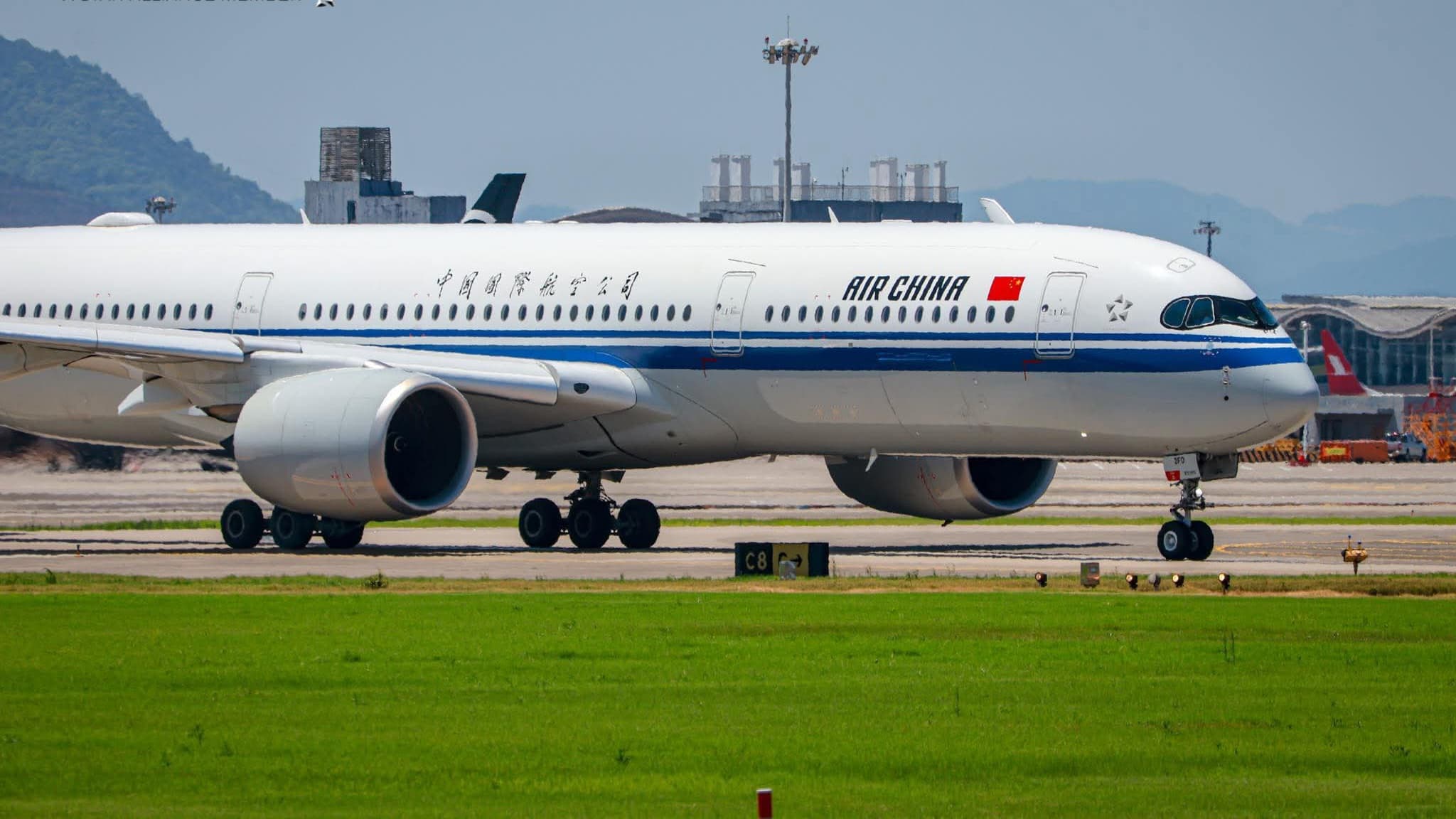
**A Mega-Order Reshaping Chinese Aviation**
Air China and its subsidiary Shenzhen Airlines have signed a landmark agreement with Airbus for 55 aircraft—15 A350-900s and 40 A320neo-family jets—valued at approximately $12.4 billion at list prices. Deliveries are scheduled between 2029 and 2032, with the A350-900s arriving from 2030 to 2032 and the A320neos from 2029 to 2032. This order, disclosed in a filing with the Shanghai Stock Exchange, highlights the accelerating modernization of Chinese fleets and Airbus's strategic push into the world's second-largest aviation market.
**Fleet Strategy and Operational Impact**
Air China already operates 30 A350-900s, making it one of Asia's largest operators of the type. Adding 15 more will push its A350 fleet past 40 by the early 2030s, reinforcing the type as the backbone of its long-haul operations alongside Boeing 777-300ERs (28 in service) and 787-9s (14). The airline states that the new aircraft will "optimize fleet and network structure, improve operational efficiency, and reduce costs." The A350-900, built largely from composite materials, offers 20-25% fuel savings over older widebodies, a critical factor for long-haul routes where fuel costs dominate.
Shenzhen Airlines, which already operates 76 A320-200s and 36 A320neos (with 29 more on order), will use its 40 new A320neos to replace older aircraft and support domestic traffic growth. The A320neo's fuel efficiency is especially valuable in China's competitive domestic market, where margins are thin. The airline also operates 15 Boeing 737 MAX 8s (with 7 more on order) and 71 737-800s, showing a mixed fleet strategy.
**Airbus's Strategic Win in China**
This order follows China Eastern Airlines' recent agreement for 25 A330neos (worth $9.4 billion) and Air China Cargo's conversion of four options into firm orders for the A350F freighter. Airbus now offers a complete product line for China: the A320neo for domestic and regional routes, the A330neo for medium-haul, the A350-900 for long-haul, and the A350F for cargo. Boeing, meanwhile, continues to struggle with the 737 MAX's limited presence in China and the planned end of 777F production by 2027, leaving the A350F with a clear runway in the long-haul freighter market.
**What This Means for ATPL and ATC Students**
For ATPL students, this order illustrates real-world fleet planning: airlines balance aircraft performance, fuel efficiency, and network needs when placing orders. Understanding the A350's composite structure and fuel savings is directly relevant to aircraft systems and performance exams. For ATC students, the introduction of new aircraft types like the A350-900 and A320neo into Chinese airspace will require updated procedures and awareness of performance characteristics, especially on long-haul routes. The order also highlights the geopolitical dynamics of aviation manufacturing, a topic often discussed in aviation management modules.