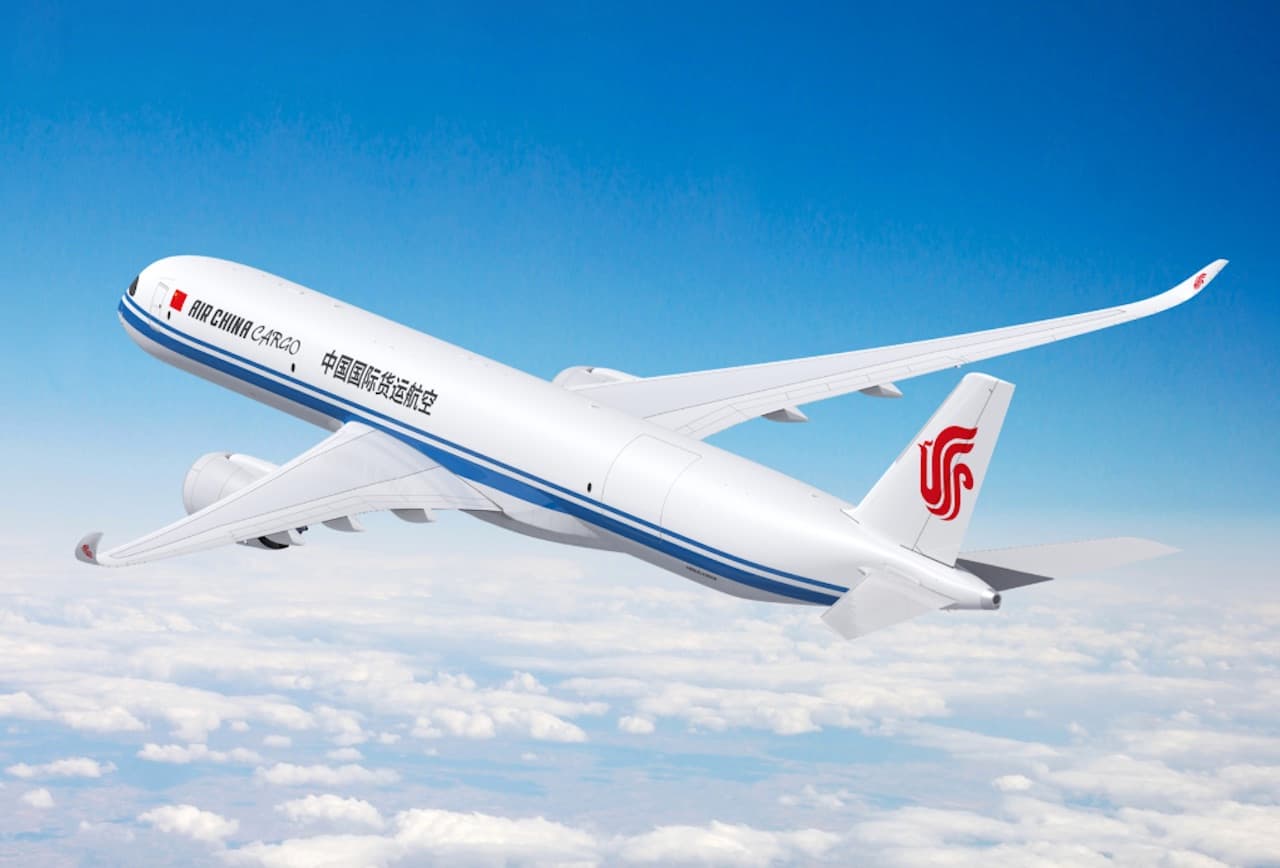
Air China Cargo has officially converted four options into firm orders for the Airbus A350F, raising its total commitment to ten aircraft. The decision, approved by the company's board of directors and disclosed in a regulatory filing with the Shenzhen Stock Exchange, amends the original contract signed with Airbus in late 2025. At that time, Air China Cargo placed firm orders for six A350Fs with four options, becoming the first mainland Chinese customer for the type.
At list prices, the four additional aircraft are valued at approximately $1.86 billion, though the actual transaction price is significantly lower due to standard industry discounts. The company had previously informed shareholders that the total list price for up to ten A350Fs would be $4.65 billion, with the option exercise deadline set for the end of 2026. Air China Cargo stated that "Airbus has granted the company a substantial price reduction; therefore, the actual consideration will be lower than the catalogue price," noting that it is standard practice in the global aviation industry to communicate list prices rather than negotiated ones.
The delivery schedule reflects a phased investment strategy aligned with expected growth in intercontinental freight. The first six A350Fs are scheduled for delivery between 2029 and 2031, while the four additional units will arrive between 2032 and 2033. This gradual ramp-up gives the carrier flexibility to adapt capacity to global trade cycles while managing operational integration costs. Air China Cargo also retains options for six more A350Fs, exercisable until the end of 2026, which could bring its future fleet of the type to sixteen aircraft beyond 2030.
Currently, Air China Cargo operates a mixed fleet of Boeing 777Fs, Boeing 747-400Fs, and Airbus A330-200s converted to freighters (P2F). As of early 2025, the all-cargo fleet comprised 19 aircraft: 12 777Fs, 3 747-400Fs, and 4 A330-200P2Fs, with additional units on order. The introduction of the A350F from 2029 will mark a significant shift, bringing a next-generation widebody freighter alongside existing Boeing long-haul aircraft. Airbus highlights a 40% reduction in fuel consumption and CO₂ emissions per tonne-kilometre compared to older quad-engine freighters, along with optimised payload and cargo volume for long-haul routes.
For ATPL and ATC students, this order underscores the growing importance of fuel-efficient, twin-engine freighters in global logistics. Understanding the A350F's performance characteristics—such as its range, payload capacity, and fuel efficiency—will be essential for flight planning, performance calculations, and airspace management as these aircraft enter service. The phased delivery schedule also illustrates how airlines manage fleet renewal and capacity planning over multi-year horizons, a key concept in airline operations and strategic management.