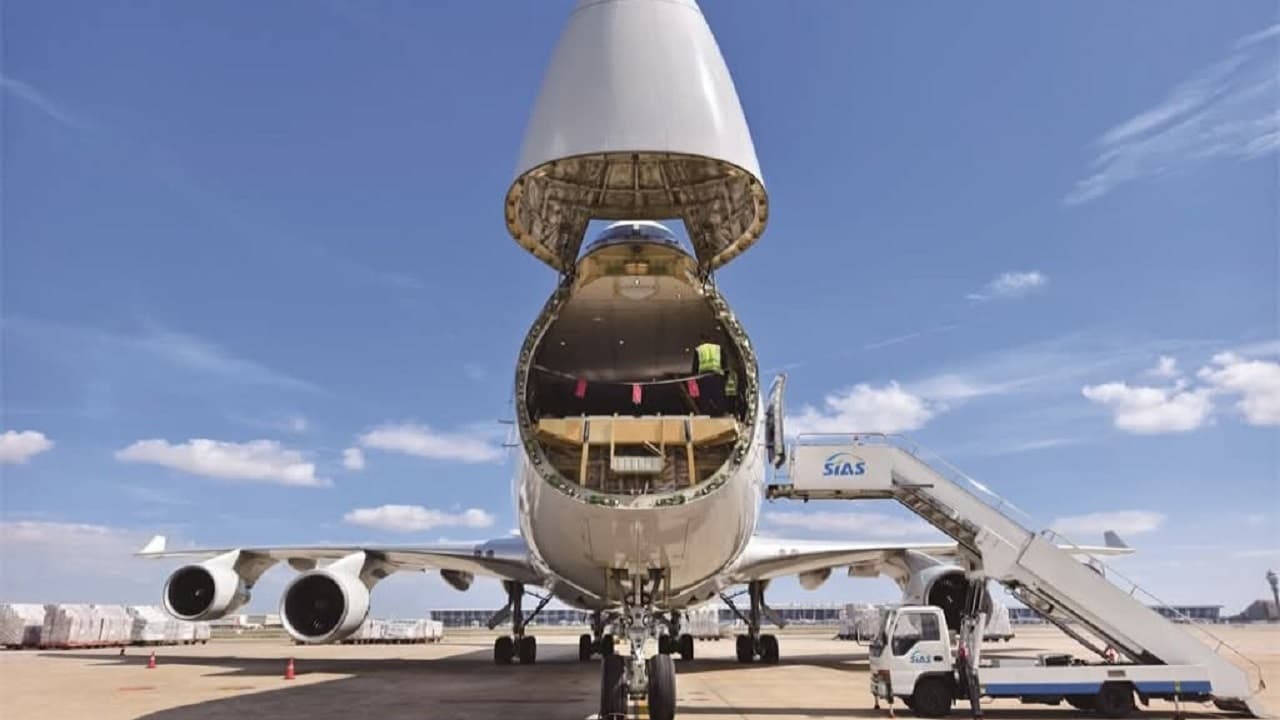
The International Air Transport Association (IATA) has released its March 2026 air cargo market analysis, revealing a sharp 4.8% year-on-year decline in global demand measured in cargo tonne-kilometers (CTK). International traffic fell even more steeply at 5.5%. The primary culprit: the ongoing Middle East conflict, which has severely disrupted operations at major Gulf hubs. Capacity (ACTK) also contracted globally by 4.7%, with international capacity down 6.8%, leaving the cargo load factor nearly unchanged at 47.9%.
Willie Walsh, IATA's Director General, stated: "Air cargo demand fell 4.8% in March compared to the previous year, mainly due to severe disruptions at major Gulf hubs caused by the war in the Middle East." He noted that the usual seasonal slowdown after Lunar New Year also contributed, but emphasized that underlying trends remain solid, with WTO and IMF forecasts still predicting growth in 2026. The geopolitical shock is dramatic: Middle Eastern carriers alone removed nearly 1.7 billion CTK from the market in March, more than offsetting gains in other regions. The conflict, which began in late February, led to the cancellation or rerouting of the vast majority of flights to and from the region, with over 70% of available seat kilometers (ASK) eliminated within days.
Regional performance shows a two-speed world. African carriers posted the strongest growth at 7.0%, with capacity down 4.6%, pushing the load factor to 49.6% (+5.4 points). This is fueled by diversion flows around the Gulf and the booming Africa-Asia corridor. Asia-Pacific carriers saw demand rise 5.4% and capacity 5.0%, with a load factor of 48.9%. European carriers recorded moderate growth of 2.2% in demand but capacity grew faster at 4.2%, lowering the load factor to 59.9% (-1.1 points), still the highest of any region. North American carriers saw demand fall 1.2% and capacity 1.1%, with a stable load factor of 40.6%. Latin America and the Caribbean saw demand up 1.8% but capacity up 5.1%, dropping the load factor to 38.3%. The Middle East suffered the most: demand collapsed 54.3%, capacity fell 52.4%, and the load factor dropped to 45.7%.
Route-level data highlights stark contrasts. The Africa-Asia corridor grew 22.6% year-on-year, with nine consecutive months of expansion. Europe-Asia trade rose 14.2%, extending a 37-month growth streak, benefiting from rerouted freight avoiding Gulf hubs at the cost of longer flight times. Intra-Asia traffic was up 7.5%. Conversely, Gulf-linked routes were devastated: Middle East-Asia fell 58.6%, and Europe-Middle East dropped 57.6%. The Europe-North America route also turned negative (-3.4%), its first annual contraction in nearly a year. Notably, dedicated freighter aircraft fared better than belly cargo: freighter volumes declined only 0.9% year-on-year, while belly cargo plummeted 12.1%, more exposed to flight cancellations and connectivity losses.
Beyond the conflict, the cargo sector faces a historic fuel price shock. IATA reports that the global average jet fuel price surged 106.6% year-on-year in March, driven by a 43.1% rise in Brent crude and an explosion in refining margins (+320% to +390%). Jet fuel reached its highest level in over twenty years. "All eyes are on fuel supply and its price, which are expected to test the sector's resilience in the coming months," warned Walsh. Cargo yields have risen by approximately 14% to 19% year-on-year depending on the segment, partially offsetting cost pressures but squeezing margins for carriers unable to pass on the full increase.