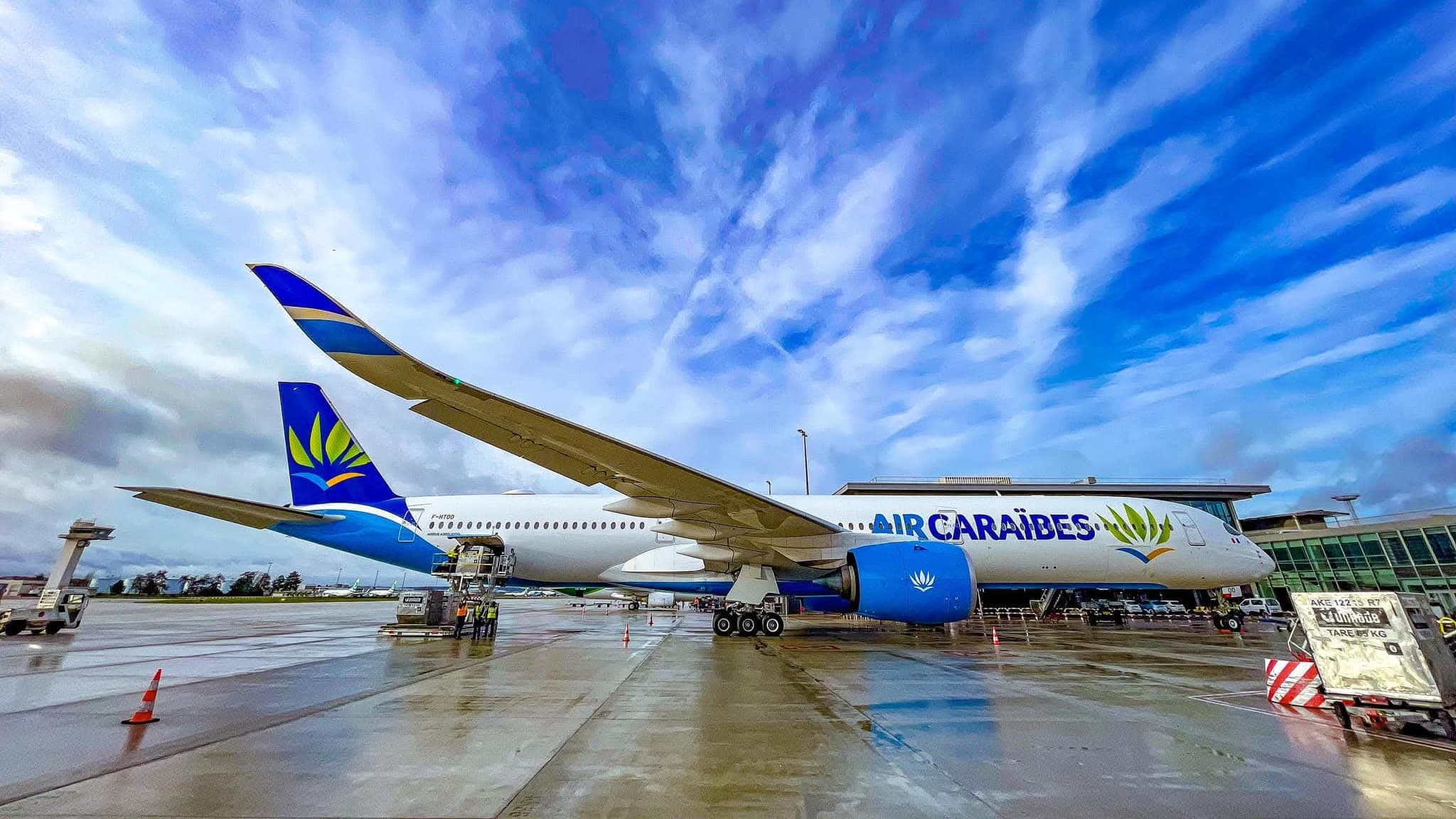
Air Caraïbes has announced a new direct seasonal flight from Paris-Orly to San Salvador (ZSA) in the Bahamas, offering French travelers a rare non-stop connection to one of the archipelago's more secluded islands. Operated once weekly, the service runs until August 23, 2026, with a planned resumption on October 22, 2026, aligning with the winter leisure season. This route marks a strategic expansion of Air Caraïbes' Caribbean network, moving beyond its traditional focus on the French Antilles and Guyana.
The flight departs Paris-Orly at 10:15 local time, arriving in San Salvador at 13:35 after a 9-hour 20-minute eastbound journey. The return leg is longer at 12 hours 10 minutes, departing San Salvador at 14:45 and arriving at Orly the next morning at 08:55. The airline deploys an Airbus A330-300 configured in three classes: 12 Madras (business), 35 Caraïbes (premium economy), and 307 Soleil (economy). The aircraft's 354-seat layout is typical of leisure-oriented long-haul operations, with seat pitch ranging from 81 cm in economy to 155 cm in business, and seat width from 42 cm to 48 cm. While the business class seats recline to 160°, they are not full-flat, reflecting the airline's premium leisure positioning.
San Salvador holds historical significance as the first landfall of Christopher Columbus in the New World in 1492, but today it remains a niche destination, prized for its white sand beaches, diving spots, and low-key atmosphere. The new direct flight reduces travel time and eliminates connections, making the Out Islands more accessible from Europe. Air Caraïbes has previously operated this route in partnership with Club Med for its Columbus Isle resort, with a direct outbound and a return via Santo Domingo or Punta Cana. The current iteration represents a more structured integration into the airline's long-haul schedule, with interline agreements with Bahamasair for onward connections to Nassau.
For ATPL and ATC students, this route offers a practical example of seasonal long-haul planning, aircraft utilization, and the operational challenges of serving a secondary destination with limited infrastructure. The 9–12 hour flight times, varying by direction due to prevailing winds, illustrate the impact of jet streams on flight planning and fuel management. The three-class cabin configuration, while not unique, demonstrates how airlines balance capacity and comfort on leisure routes. Additionally, the seasonal suspension and resumption pattern highlights the commercial logic behind network scheduling, a key concept in airline management and dispatch.
From an ATC perspective, San Salvador's airport (ZSA) is a relatively small facility, and the weekly rotation of a widebody aircraft requires coordination with local ground handling and air traffic services. The flight's timing, with a late afternoon departure from San Salvador and an overnight return to Paris, also raises considerations for crew duty time and rest periods under EASA regulations. This case study underscores the importance of understanding both commercial and operational factors in route development, a skill essential for future aviation professionals.