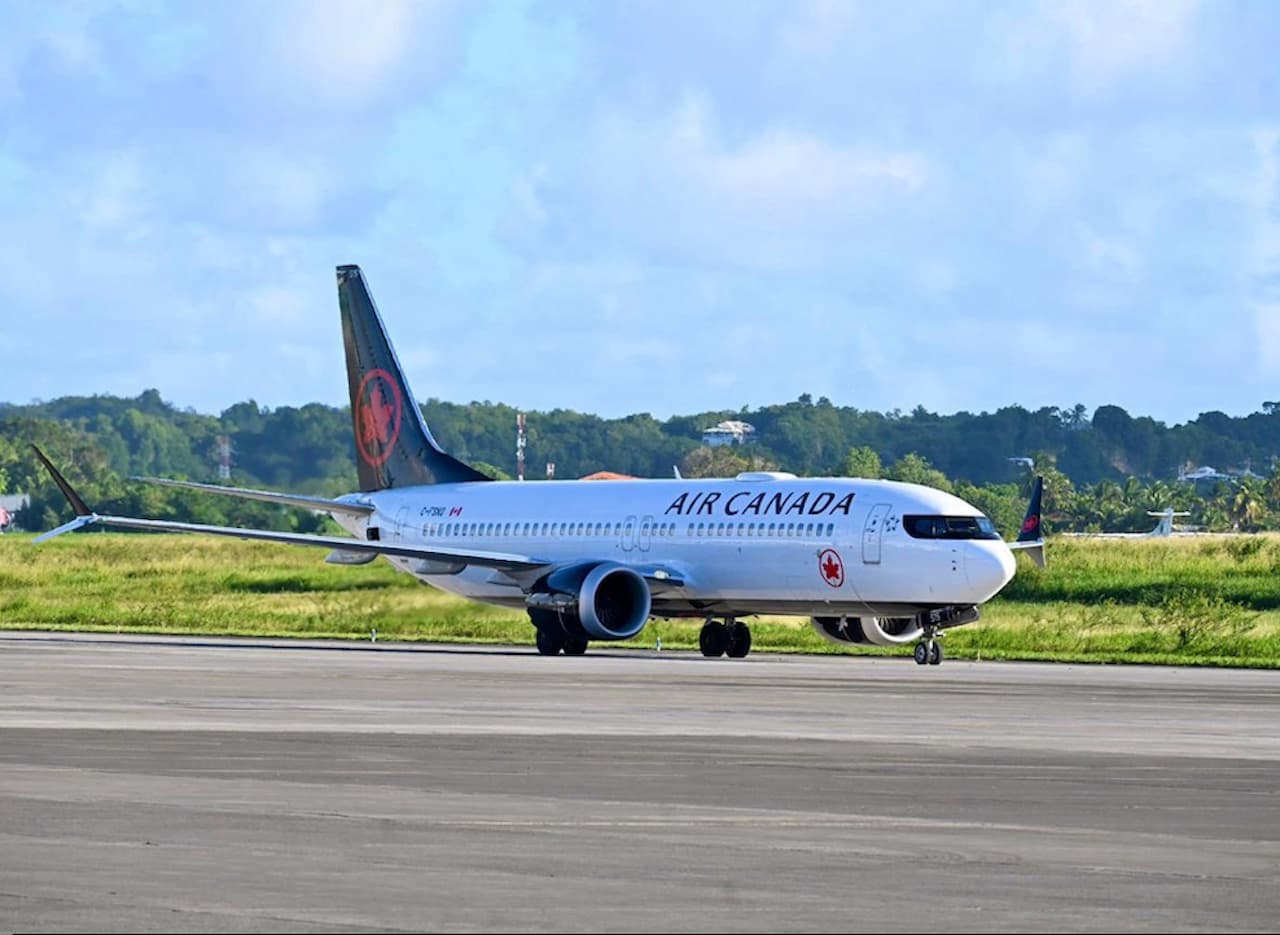
Air Canada has announced a new seasonal transatlantic route between Halifax Stanfield International Airport and Brussels Airport, launching on June 18, 2026. The service will operate three times a week until early September, using the Boeing 737 MAX 8 configured for 169 passengers (16 business, 153 economy). This move is part of a broader industry trend: airlines are increasingly deploying narrow-body, long-range aircraft like the 737 MAX and A321LR/XLR to open thinner point-to-point routes that were previously uneconomical with wide-body jets.
For ATPL students, this route offers a real-world case study in network planning and aircraft economics. The 737 MAX 8's range and fuel efficiency allow Air Canada to serve a lower-density market like Halifax–Brussels profitably, while still offering connections via Brussels Airlines (a Star Alliance partner) to Africa, the Middle East, and beyond. Understanding how airlines balance load factors, hub connectivity, and seasonal demand is a core part of airline management modules in ATPL training.
ATC students can also learn from this development. Halifax's role as a secondary transatlantic gateway is growing, and controllers there will handle increased traffic during summer months. The 6-hour flight time places this route in the medium-haul category, meaning ATC must coordinate oceanic clearances, NAT tracks, and handoffs between Canadian and European airspace. The seasonal nature also tests resource planning—staffing and airspace management must adapt to fluctuating demand.
From a regulatory perspective, the Boeing 737 MAX has been under scrutiny since its grounding in 2019. Its return to service involved extensive recertification by EASA and Transport Canada, a process that ATPL students should study as an example of how safety investigations lead to design and operational changes. The MAX's Enhanced Ground Proximity Warning System (EGPWS) and Maneuvering Characteristics Augmentation System (MCAS) are key topics in aircraft systems exams.
Finally, this route highlights the importance of secondary airports in global aviation. Halifax is not a major hub like Toronto or Montreal, but its geographic position makes it ideal for transatlantic flights. ATPL students should note how airlines use such airports to bypass congested hubs, reduce turnaround times, and offer direct services that attract both leisure and business travelers. This is a textbook example of network optimization in the modern airline industry.