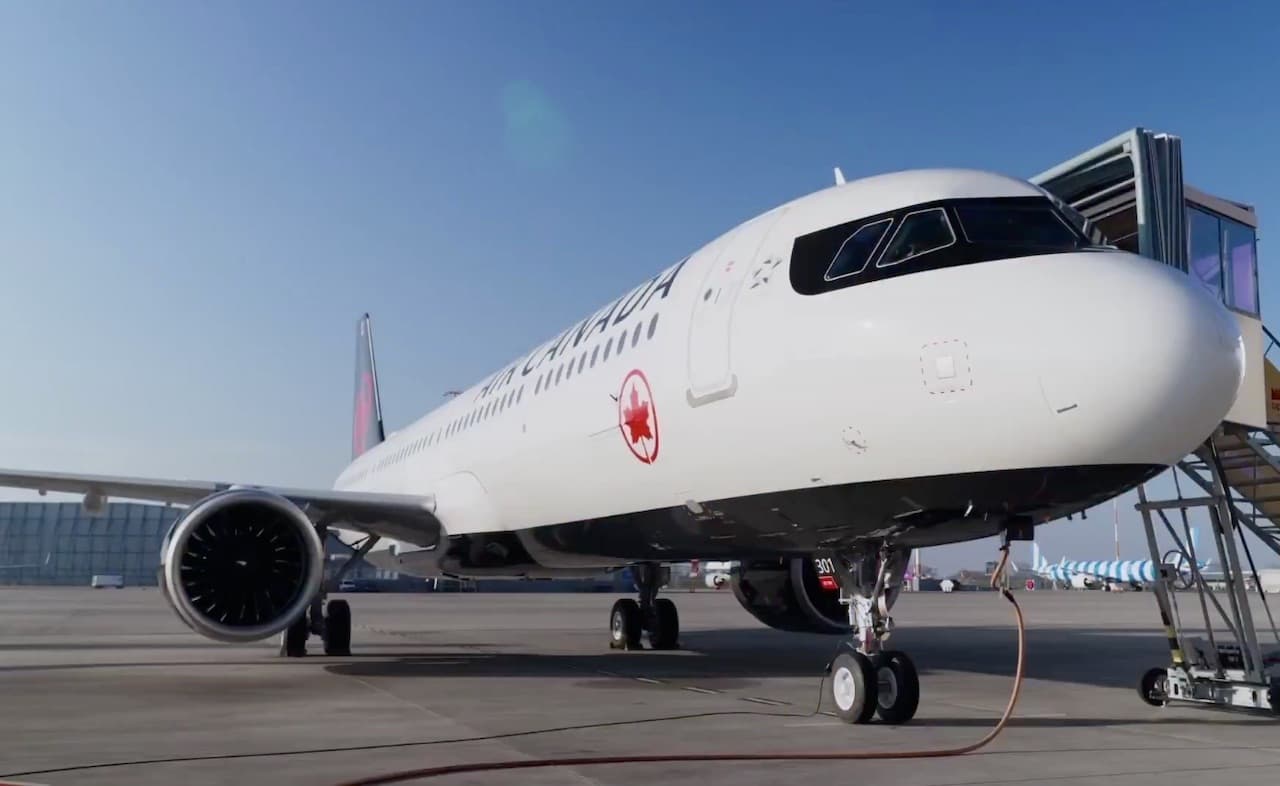
On June 11, 2026, Air Canada inaugurated a seasonal direct service between Nantes Atlantique Airport and Montréal-Trudeau, operating three times weekly until October 12. From July 23, the route will be served by the airline's brand-new Airbus A321XLR, making it one of the first European destinations to receive this next-generation long-range narrowbody in Air Canada's fleet. Initially, flights are operated with the Boeing 737 MAX, another modern single-aisle type already proven on transatlantic missions.
For ATPL students, this route is a textbook example of how airlines are redefining long-haul economics. The A321XLR, with a range of up to 4,700 nautical miles, allows carriers to open thinner point-to-point markets that were previously uneconomical with widebody aircraft. Air Canada's configuration — 14 lie-flat Signature seats in a 1-1 layout and 168 Economy seats — demonstrates how premium cabins are being adapted for single-aisle aircraft, a trend that will shape future fleet planning and crew training. Understanding the performance characteristics, fuel planning, and ETOPS implications of the A321XLR is directly relevant to ATPL candidates studying aircraft performance and operational limitations.
From an ATC perspective, the integration of a new long-haul narrowbody into a busy hub like Montréal-Trudeau introduces operational considerations. The route's schedule (three weekly rotations) requires careful slot coordination and may impact arrival/departure sequencing, especially during peak summer traffic. Additionally, the US preclearance facility at Montréal allows passengers to clear US customs before boarding, a unique procedural element that ATC trainees should understand as it affects gate assignments, passenger flow, and turnaround times. The hub-and-spoke model, with Nantes feeding Air Canada's network across North America, the Caribbean, and South America, is a classic example of network planning that ATC students encounter in airspace design and traffic flow management.
For both ATPL and ATC students, this news underscores the growing importance of secondary European cities in transatlantic networks. Nantes, served by VINCI Airports, has seen increased demand from the Grand Ouest region, driven by family ties, economic links, and youth mobility. The competition with Air Transat (which operates year-round Nantes–Montreal) illustrates market dynamics that affect route profitability and frequency decisions. Aspiring aviation professionals should monitor how airlines balance seasonal versus year-round services, and how aircraft technology (A321XLR vs. 737 MAX) influences operational flexibility.
Finally, the announcement highlights the role of partnerships: Air Canada collaborates with VINCI Airports to develop infrastructure and marketing. For ATPL students, this is a reminder that airline success depends on airport relationships, slot availability, and ground handling — topics covered in airline management modules. For ATC trainees, it reinforces the need for seamless coordination between airlines, airports, and air navigation service providers to accommodate new routes without compromising safety or efficiency.