**Air Canada has officially introduced the Airbus A321XLR into commercial service, starting with domestic flights before expanding to transatlantic routes.** The first aircraft, registered C-GXLR, operated a symbolic Montreal–Toronto flight on June 9, covering 506 km in just 50 minutes. This cautious approach allows crews to gain familiarity with the new type before tackling longer missions.
**The international debut is set for June 15, with a Montreal–Toulouse route.** This choice is emblematic, linking Air Canada to Airbus's home city. The airline plans to add up to eleven new destinations by year-end, leveraging the A321XLR's 8,700 km range to serve thinner transatlantic markets that would be uneconomical with widebodies. Mark Galardo, Air Canada's executive vice president and chief commercial officer, called the introduction "a transformative moment" and "the start of a new era."
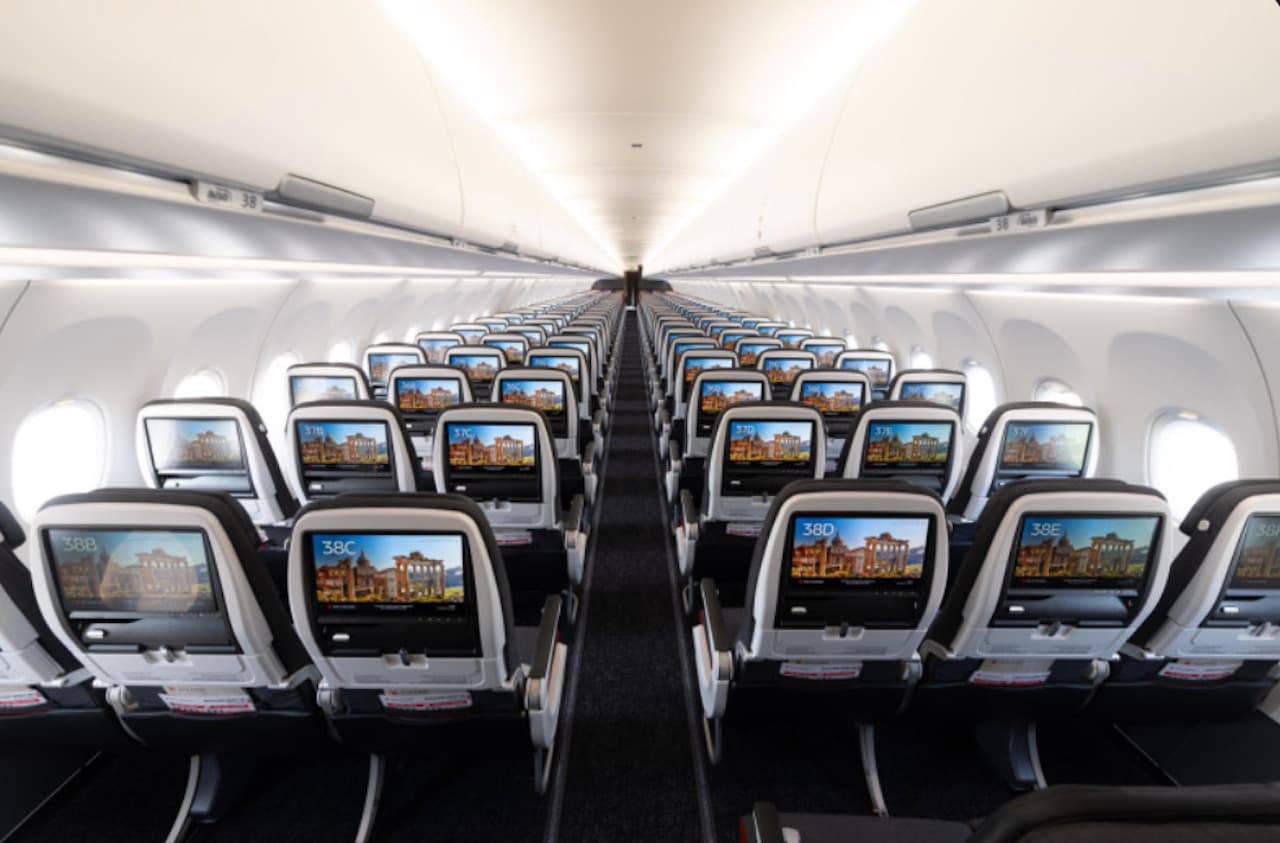
**The cabin configuration is a standout feature for a narrowbody.** The A321XLR seats 182 passengers in two classes: 14 lie-flat Signature Class seats in a 1-1 layout (a first for a Canadian narrowbody) and 168 Economy seats in 3-3. The "Glowing Hearted" cabin design draws inspiration from Canadian landscapes, featuring next-generation entertainment screens, Bluetooth connectivity, and individual power outlets. Wi-Fi is free for Aeroplan members and paid for others.
**Air Canada's fleet strategy is ambitious.** Originally ordering 26 A321XLRs in March 2022, the airline has increased the total to 30 units through direct purchases and leases. Two aircraft have been delivered so far, with more to follow. The A321XLR complements, rather than replaces, widebodies: the airline also ordered 18 Boeing 787-10 Dreamliners in 2023 to replace aging 767-300ERs. This dual approach provides flexibility to adjust capacity seasonally and explore new routes with lower risk.
**For ATPL and ATC students, this development illustrates several key industry trends.** The A321XLR exemplifies how airlines are using long-range narrowbodies to bypass congested hubs and serve secondary cities point-to-point. Understanding this aircraft's performance characteristics—range, payload, and operational constraints—is essential for future pilots and controllers who will manage these flights. The aircraft's introduction also highlights the importance of fleet planning and network optimization in modern aviation.