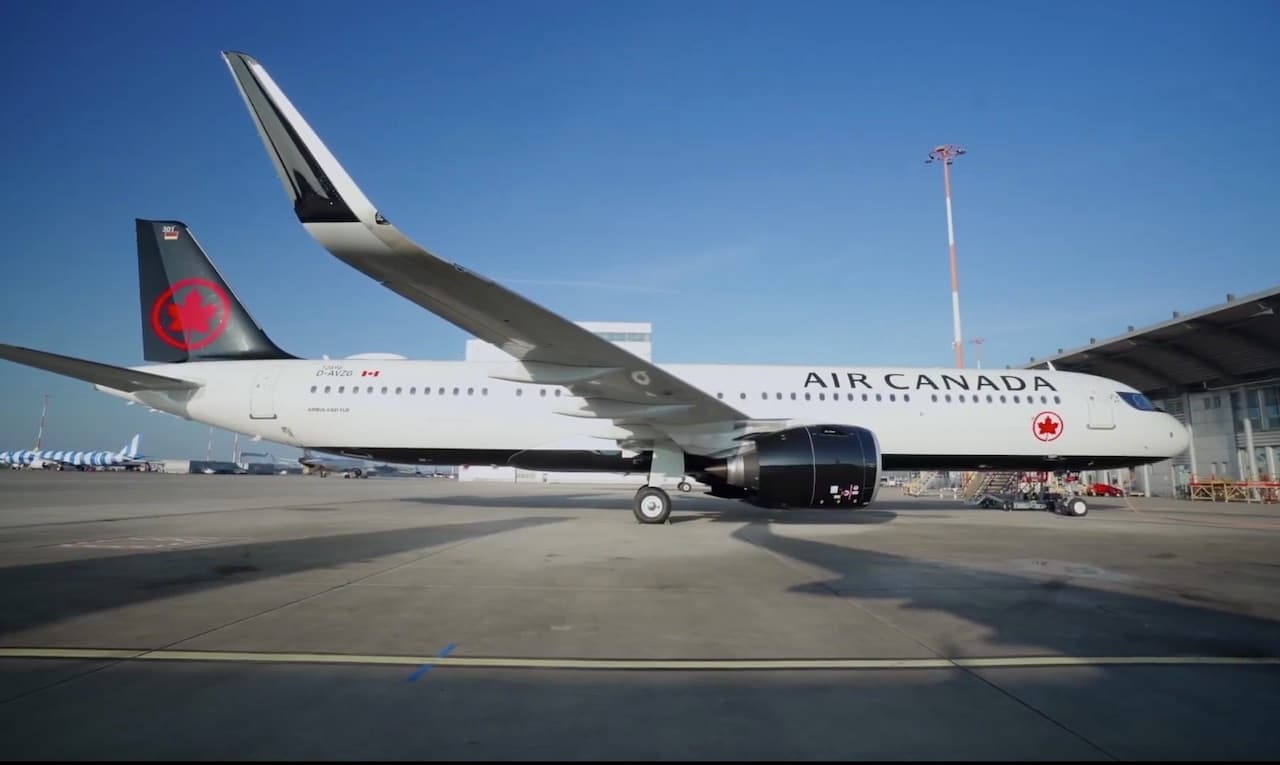
Air Canada is making a significant leap in the winter leisure segment by launching the first non-stop flights from North America to Tenerife in the Spanish Canary Islands during the 2026-2027 winter season, operated by the new generation Airbus A321XLR. This new connection is important for aviation students as it illustrates the evolution of airlines' needs in terms of fleet and network strategy. The flights will operate at a weekly frequency from Montreal and twice a week from Toronto, covering the entire high winter season from late October to late April. The flights to Tenerife will be operated by the new Airbus A321XLR, which marks a significant upgrade of the onboard product on medium-haul long-range flights for Air Canada. The aircraft will be configured to accommodate 182 passengers, with 14 fully flat Signature Class seats and 168 economy class seats, introducing a redesigned cabin standard for the airline's single-aisle fleet. This strategy is part of a broader trend in the industry, where long-range single-aisle aircraft enable the opening of more point-to-point connections while better controlling unit costs on growing leisure flows. In addition to Tenerife, Air Canada is adding four new destinations to its 2026-2027 winter program: Roatán in Honduras, Santo Domingo in the Dominican Republic, Mérida, and Mazatlán in Mexico. These openings complement an already dense network to the Caribbean, Mexico, and Central America, in line with Canadians' sustained demand for winter sun getaways. The first program elements published detail a Montreal-Roatán flight operated on Saturdays from December 12, 2026, to April 10, 2027, as well as a Toronto-Roatán flight on Sundays from December 13, 2026, to April 11, 2027. The expansion of Air Canada's flight network to leisure destinations is a concrete example of how airlines must adapt to changing passenger needs and market trends. For aviation students, understanding these strategies and the factors that influence airlines' decisions is essential to succeed in the industry. The ability to analyze market trends and understand how airlines respond to them is a key skill for future pilots and air traffic controllers.