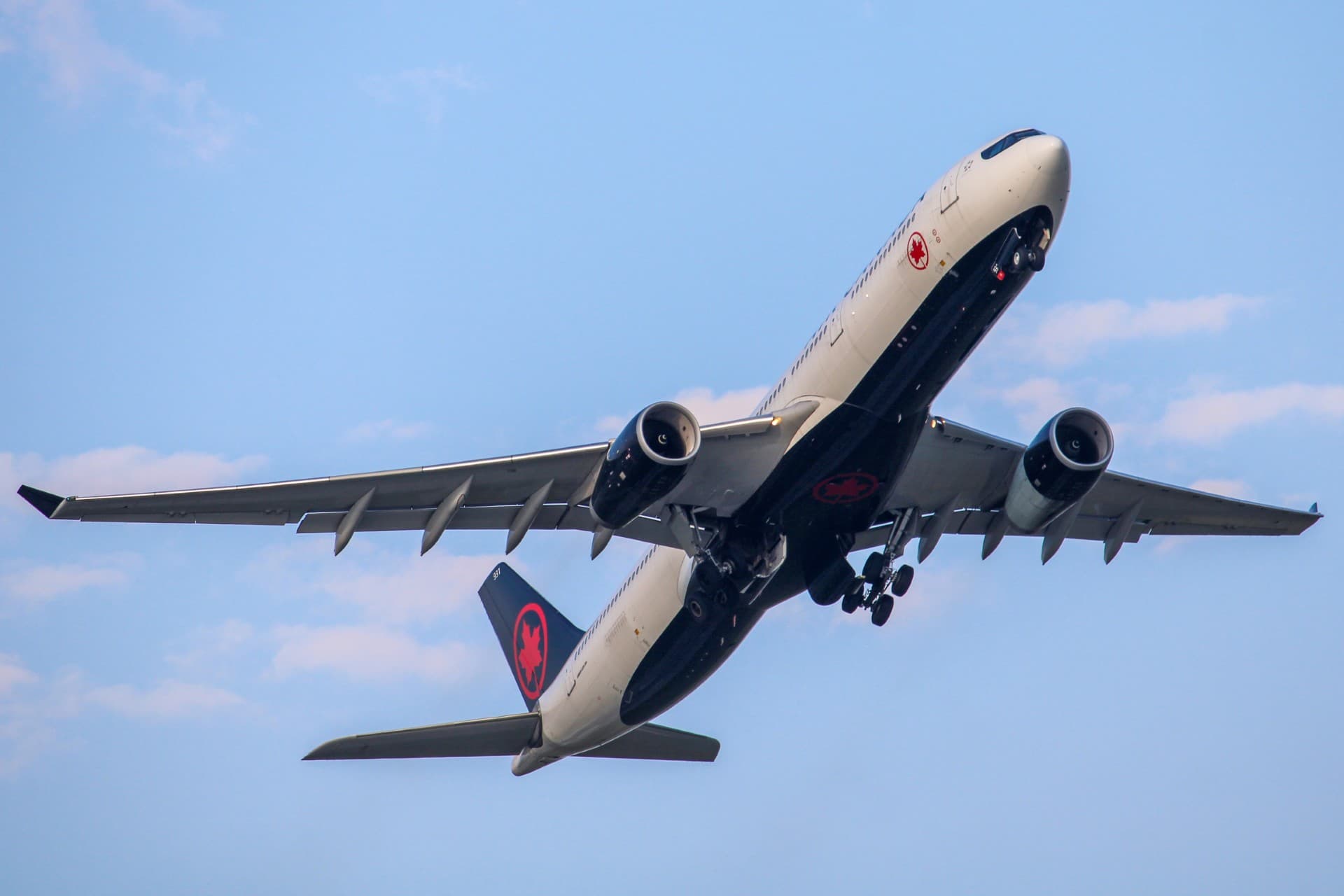
Air Canada has announced the removal or suspension of 13 international routes for the summer 2026 season, citing fluctuating demand, rising costs, and persistent operational challenges. The Canadian flag carrier is permanently cutting seven routes—including Ottawa to Tampa, Quebec City to Tulum, Montreal to Algiers, and Vancouver to Tampa—while temporarily suspending six routes to Cuba due to fuel supply issues. These adjustments reflect a broader industry trend where airlines continuously fine-tune their networks to maintain profitability in an uncertain environment.
For ATPL and ATC students, this news is a real-world case study in airline network planning, a topic covered in the Air Transport Management syllabus. The decision to drop the Montreal–Algiers route, previously operated with an A330-300, illustrates how airlines evaluate route viability based on load factors and competition. The Vancouver–Tampa route, for instance, had a load factor of only 54%, well below profitability thresholds. Understanding these metrics is crucial for future pilots and controllers who will work in an industry where capacity management is increasingly dynamic.
The temporary suspension of flights to Cuba highlights the impact of geopolitical tensions and fuel supply disruptions on airline operations. Air Canada cited warnings from government authorities about unreliable jet fuel availability at Cuban airports. This scenario is directly relevant to ATPL students studying fuel planning and operational decision-making, as well as ATC trainees who must manage traffic flow adjustments when routes are suspended. The planned resumption in late October 2026, subject to improved local energy conditions, shows how airlines must remain flexible.
Despite these cuts, Air Canada is expanding its European network by about 6% for summer 2026, driven by the introduction of the Airbus A321XLR. This long-range single-aisle aircraft is ideal for secondary transatlantic markets, allowing the airline to open or strengthen routes with controlled costs. For aviation students, the A321XLR represents a shift in aircraft technology and route economics, a topic often discussed in aircraft performance and planning modules.
Overall, Air Canada's network adjustments underscore the delicate balance between profitability, operational constraints, and geopolitical factors. Aspiring ATPL pilots and ATC professionals should note that such real-world decisions are the foundation of many exam questions and career scenarios, from fuel management to route planning and airspace coordination.