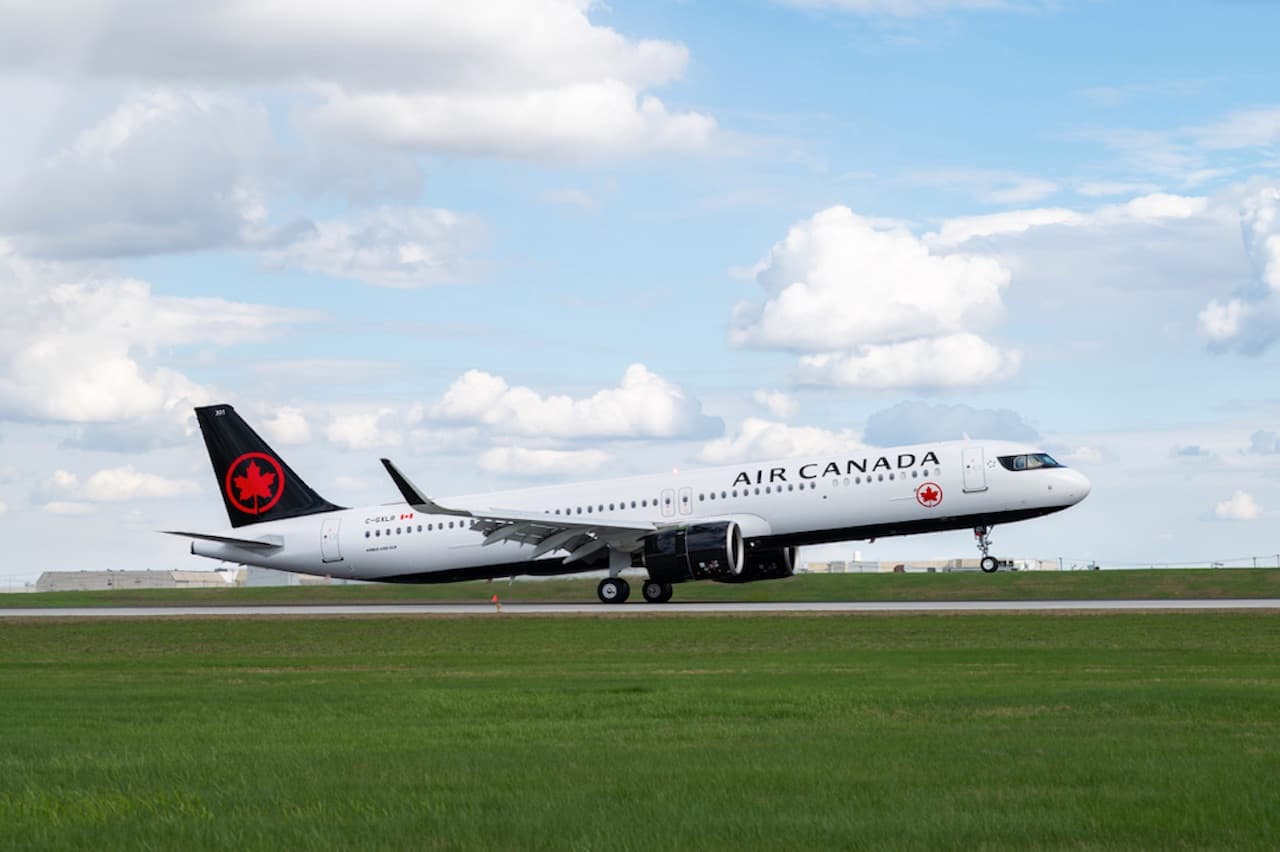
Air Canada has announced that from July 23, 2026, its seasonal Montréal–Nantes service will be operated by the Airbus A321XLR, the latest long-range narrowbody aircraft in its fleet. This move is part of a broader deployment of the type on several European and transatlantic routes for summer 2026, including Toulouse, Berlin, Dublin, Edinburgh, and Porto. The A321XLR represents a strategic shift for airlines, enabling efficient transatlantic operations with lower fuel consumption and reduced carbon emissions per seat compared to older widebody aircraft.
For ATPL students, the A321XLR is a prime example of how modern aircraft design balances range, payload, and efficiency. Its ability to fly routes like Montréal–Nantes (approximately 3,500 nautical miles) with a single-aisle configuration challenges traditional assumptions about long-haul operations. Understanding its performance characteristics—such as takeoff and landing distances, fuel planning, and ETOPS certification—will be essential for future pilots. ATC students should note that the A321XLR may operate at higher altitudes and speeds typical of long-haul flights, requiring coordination with oceanic control and handling of potential diversions.
The Nantes route also highlights the importance of the US preclearance facility at Montréal-Trudeau Airport. Passengers connecting to the United States can clear US immigration and customs before departure, arriving as domestic passengers. This operational nuance affects flight planning and passenger flow, a point relevant for ATC students studying airport operations and border control procedures.
From an industry perspective, the A321XLR deployment reinforces the trend toward narrowbody aircraft on medium-haul transatlantic routes. This impacts network planning, crew scheduling, and maintenance operations—topics covered in ATPL and ATC training. The aircraft's advanced cabin features, including 4K OLED screens and Bluetooth audio, also set new passenger experience standards.
For aviation training, this news underscores the need to stay updated on fleet developments. The A321XLR is not just a new aircraft; it represents a paradigm shift in how airlines approach long-haul travel. Both pilots and controllers must adapt to its operational nuances, from fuel management to airspace integration.