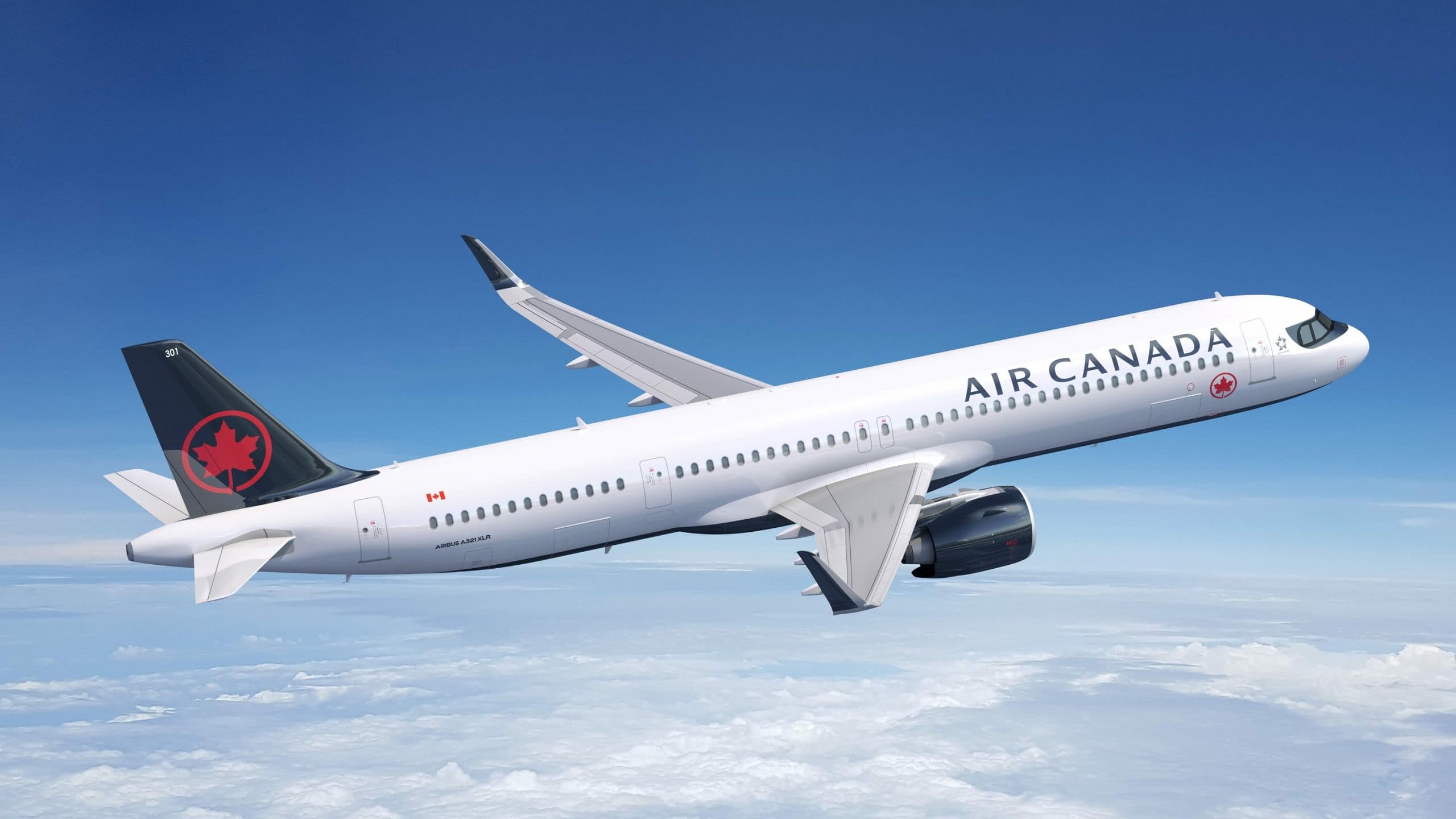
Air Canada and Aéroports de Lyon recently celebrated the 10th anniversary of the direct Montreal–Lyon route, launched in 2016. This transatlantic connection has become a vital artery for tourism and economic exchanges between the Auvergne-Rhône-Alpes region and North America, operating year-round between Montréal-Trudeau and Lyon-Saint Exupéry airports. For ATPL and ATC students, this route exemplifies the operational dynamics of long-haul narrow-body operations, a growing trend in the industry.
Currently, Air Canada operates the route with Boeing 787-9 or 787-8 aircraft, depending on seasonal demand and operational requirements. However, a significant fleet upgrade is planned: from September 8, 2026, the airline will deploy the new Airbus A321XLR on this route, with up to five weekly flights. This single-aisle aircraft will feature two classes—Air Canada Signature Class with lie-flat seats and Economy—representing a shift in transatlantic economics. For the winter season starting October 25, 2026, Air Canada will switch to a higher-capacity Airbus A330 to accommodate Canadian skiers heading to the French Alps, before returning to the A321XLR for summer 2027.
This route is a textbook case for aviation students studying network planning and fleet assignment. The A321XLR's ability to serve thin, long-haul routes profitably is reshaping airline strategies, and this Montreal–Lyon example shows how carriers balance seasonal demand with aircraft utilization. From Lyon, passengers connect to over 200 destinations via Montreal's hub, with US preclearance available for those traveling to the United States. The route also benefits from the Train + Air program with SNCF (including OUIGO), making it accessible to passengers across southern France.
Air Canada's French network extends beyond Lyon: year-round flights from Montreal to Toulouse (recently upgraded to A321XLR), seasonal summer service to Nice, and a new seasonal route to Nantes launched June 11, 2026 (three times weekly). These connections complement the daily flights from Montreal and Toronto to Paris-Charles de Gaulle. For ATPL students, understanding these network dynamics—hub connectivity, seasonal adjustments, and aircraft type selection—is crucial for airline management and operational planning. ATC trainees can appreciate the coordination required for transatlantic flights, including preclearance procedures and slot management at busy hubs.