**Air Austral Returns to Profit and Plans Post-A220 Fleet Strategy**
Air Austral has reported a return to net profitability for its fiscal year ending March 31, 2026 (FY26), with an operating profit of €9.3 million and a net profit of €1.5 million. This marks a significant turnaround from the previous year, when the airline posted an operating profit of €2 million but a net loss of around €11 million. Revenue rose 5% to €464 million, driven by a 5% increase in passenger traffic to 1,226,593 passengers and a 15% jump in cargo volumes to 16,729 tonnes. The airline achieved a record load factor of 92%, up 2 percentage points from the prior year, reflecting strong demand on key routes such as Réunion–Paris and Mayotte–Paris.
**Why This Matters for ATPL and ATC Students**
This financial recovery is a textbook case of airline turnaround management, a topic often covered in ATPL and ATC training. Students can learn how cost discipline, network optimization, and fleet modernization interact to restore profitability. The record load factor of 92% is particularly instructive: it shows how airlines balance capacity and demand, a concept directly relevant to ATC students studying slot coordination and traffic flow management. For ATPL students, understanding the economics behind such metrics is crucial for future roles in airline operations or management.
**Fleet Transition: A220 Out, A320neo In**
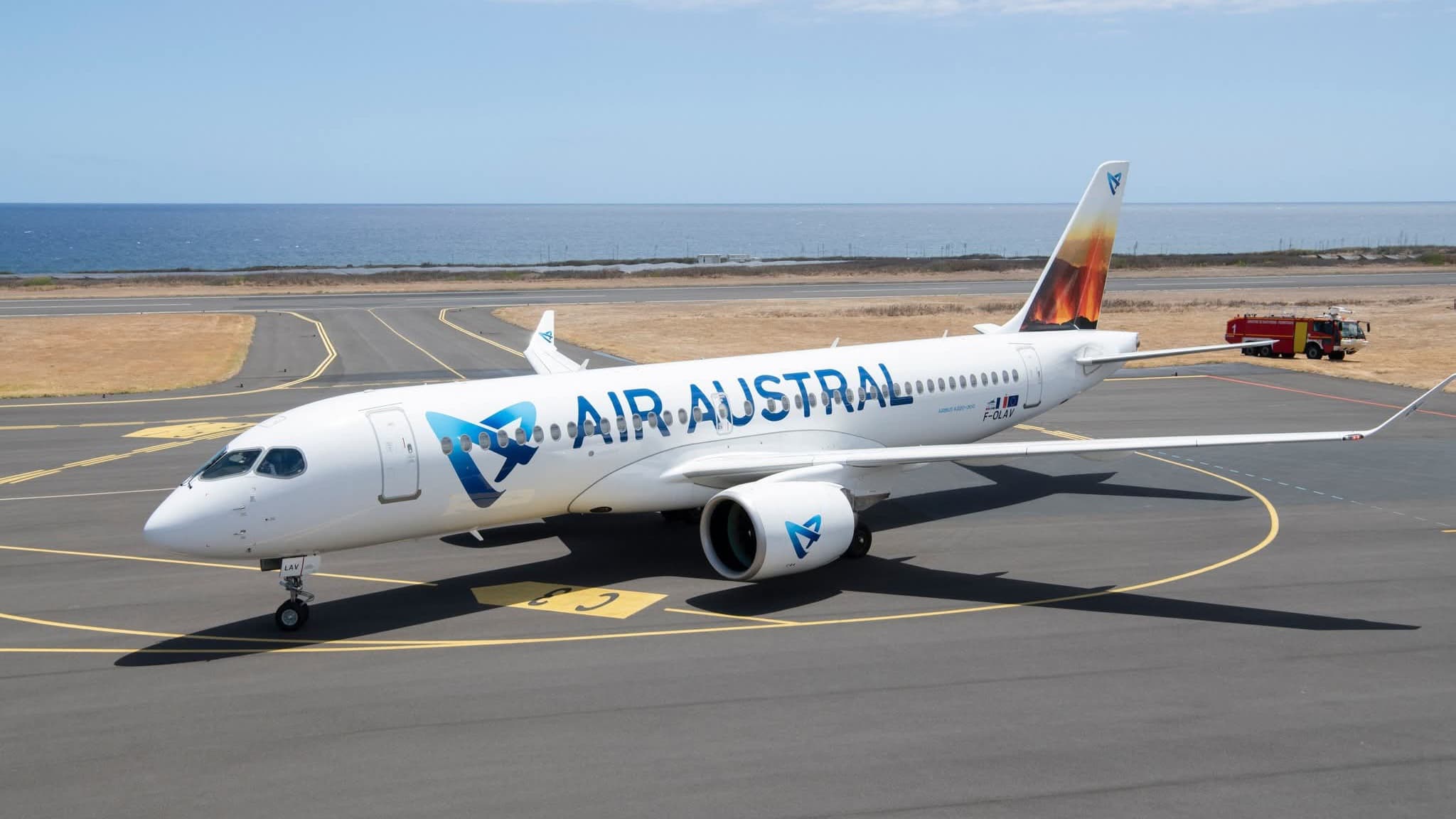
A key strategic move is the early retirement of the three Airbus A220-300s, which will leave the fleet by December 2026. These aircraft, introduced in 2021, were plagued by Pratt & Whitney GTF engine issues, leading to frequent groundings. Air Austral has signed a letter of intent with lessor Macquarie AirFinance to lease two Airbus A320neos, arriving in March and May 2027. The A320neo offers higher capacity and better unit economics, aligning with strong regional demand. This transition highlights the importance of fleet planning and engine reliability—topics that ATPL students study in aircraft performance and systems modules. ATC students can appreciate how fleet changes affect airport slot allocation and ground handling requirements.
**Cost Pressures and Mitigation**
Despite the positive results, Air Austral faces headwinds from rising fuel costs due to geopolitical tensions in the Middle East. The airline is implementing a fuel surcharge, hedging strategies, and strict cost controls. These measures are classic examples of risk management in aviation, a subject that ATPL students encounter in flight planning and fuel management. ATC students can relate to how fuel price volatility influences airline scheduling and route planning, which in turn affects air traffic demand.
**Conclusion**
Air Austral's turnaround demonstrates that disciplined execution can overcome operational and financial challenges. For aviation students, this case study offers practical insights into airline economics, fleet strategy, and crisis management—all essential knowledge for future pilots and controllers.