Air Astana shifts 15% of international capacity toward China
Following regional airspace closures and market disruptions, the Kazakh flag carrier redeployed 15% of its international operations toward Chinese destinations within five days.
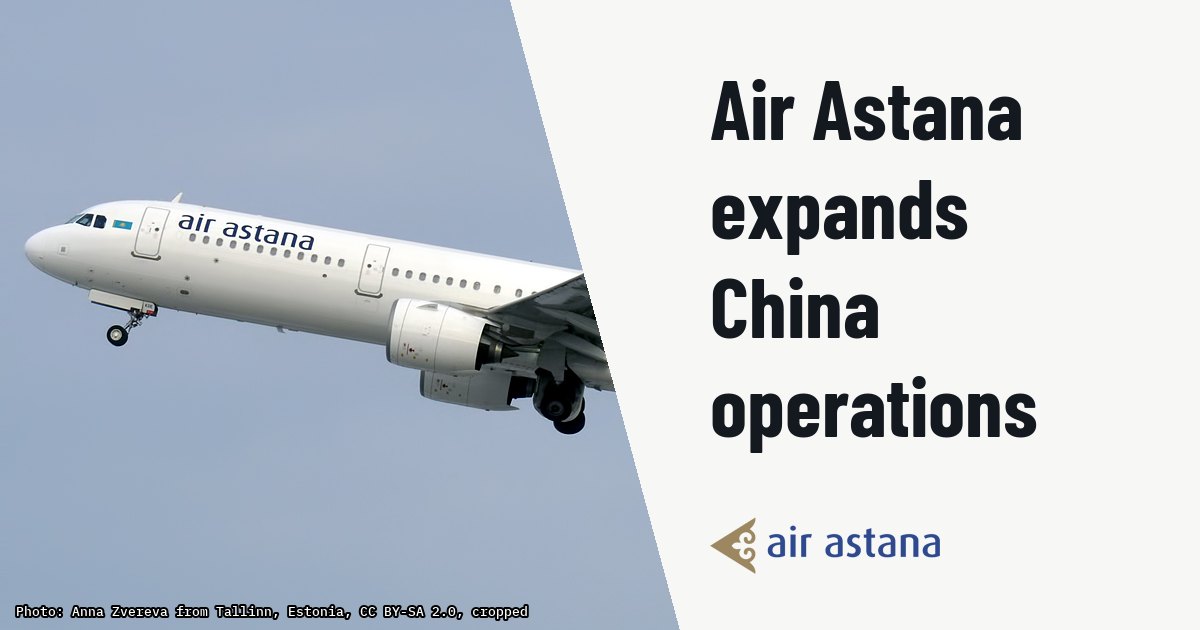
Air Astana restructured its international route network after geopolitical events halted operations in the Middle East and rising fuel prices escalated operating expenses. Speaking in Almaty, chief executive Ibrahim Canliel stated that the carrier redistributed 15% of its international capacity within five days, allocating aircraft to new and existing destinations.
After earlier disruptions caused by insurer bans on Russian airspace overflights and the loss of key northern markets, the airline pivoted heavily toward the Chinese market. Capacity between Kazakhstan and China climbed from 23 weekly flights in the previous summer to 52 flights this summer. The carrier increased frequencies on existing routes to Beijing, Guangzhou, Shanghai, Urumqi, and Sanya, while launching scheduled service linking Almaty to Jining, a city previously lacking international connectivity.
According to Canliel, load factors remained near peak levels, delivering high revenues in March and April. The geographic position of Kazakhstan, located within two to three flight hours of approximately 40% of the global population, underpins a strategy to capture transfer traffic between Asia, Europe, Central Asia, and the Caucasus. Connecting passengers currently account for 14% of international traffic, with management targeting 30% in the medium term and potentially 40% to 50% over the long term.
Why it matters for your training
Network reallocations driven by geopolitical conflicts directly shape airline scheduling, crew duty rosters, and alternate airport planning across Central Asia.
Sources
Article rewritten with the help of AI from the cited sources.