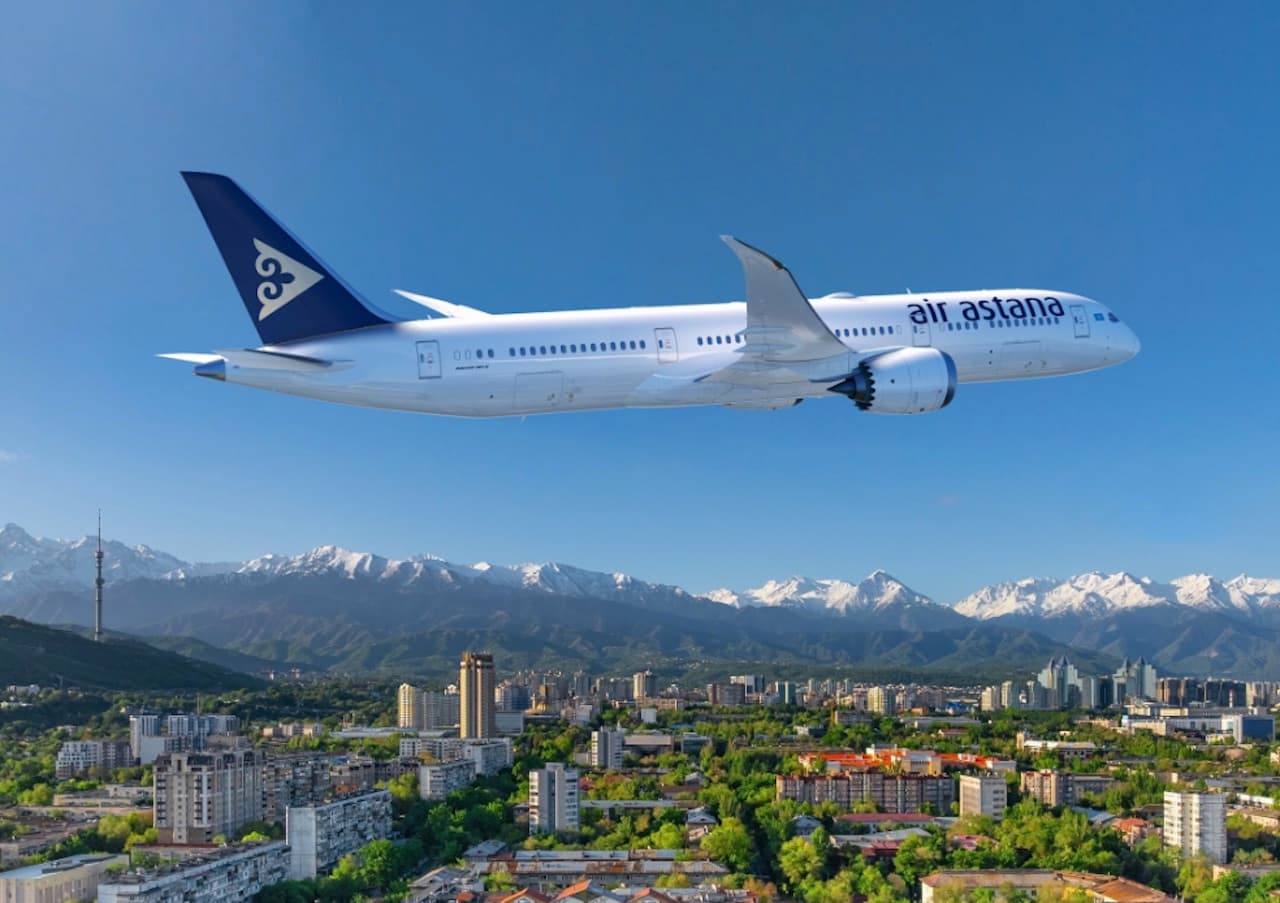
**Air Astana has officially moved its Frankfurt operations to the brand-new Terminal 3 at Frankfurt Airport (FRA), one of Europe's most modern terminal facilities, while simultaneously increasing flight frequencies to Kazakhstan for the summer 2026 season.**
Since May 5, 2026, all Air Astana flights have been operating from Terminal 3, with check-in counters, self-service kiosks, and baggage drop points now located in Zone 34. The move was announced on May 12 and underscores the airline's commitment to enhancing passenger experience through state-of-the-art infrastructure. Terminal 3, developed by Fraport, is designed to handle growing traffic volumes with a strong emphasis on self-service technologies that streamline the passenger journey. Premium travelers in business class and Nomad Club Gold/Diamond members also gain access to the Priority Lounge on the fifth floor after security and passport control.
**This relocation is paired with a significant capacity boost on routes between Germany and Kazakhstan.** The Astana (NQZ)–Frankfurt service becomes daily, up from a lower frequency, while Almaty (ALA) flights operate three times weekly (Monday, Thursday, Saturday). The Uralsk (URA) route is maintained with one weekly rotation. These increases target both business travelers—especially those in the energy and industrial sectors—and growing connecting traffic between Europe and Central Asia.
**For ATPL and ATC students, this development offers a real-world case study in hub operations and route network planning.** Frankfurt is a major European hub and a gateway to the Schengen area and intercontinental networks. Air Astana's choice to move to Terminal 3—the newest and most automated terminal at FRA—reflects how airlines leverage infrastructure to improve operational efficiency and brand perception. The airline's use of Airbus A321LR aircraft on these routes also demonstrates how modern, fuel-efficient narrowbodies are enabling long-haul operations on lower-density markets, a trend that future pilots and controllers will increasingly encounter.
**The strategic importance of Central Asian carriers is growing, and this move positions Air Astana to capture more traffic on the Europe–Asia corridor.** Understanding such network decisions helps ATPL students grasp commercial aviation dynamics, while ATC trainees can appreciate how terminal allocation and slot coordination affect airport capacity and flow management.