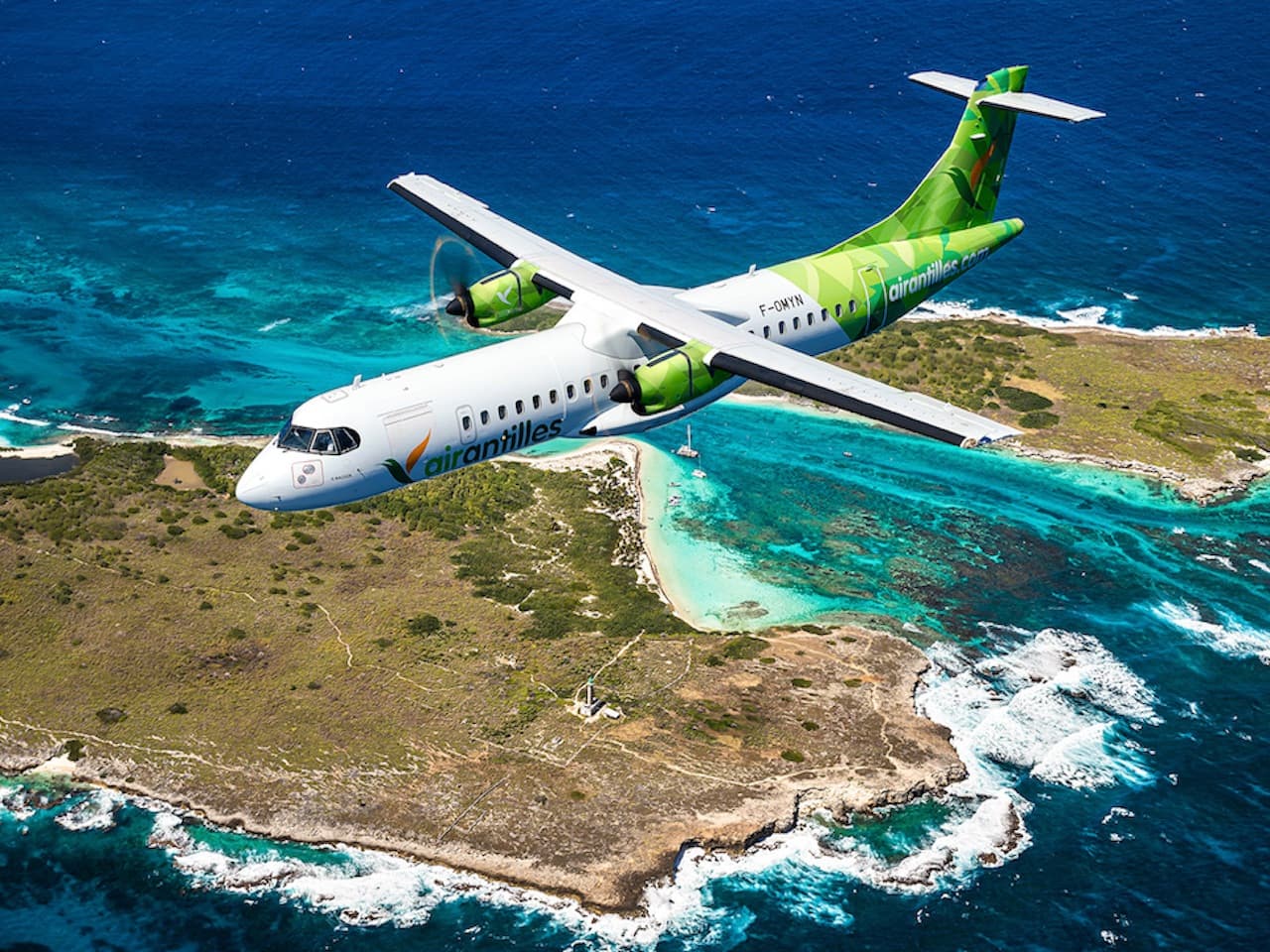
The judicial liquidation of Air Antilles, pronounced on April 27 by the mixed commercial court of Pointe-à-Pitre, has resulted in the immediate cessation of operations and the loss of 116 jobs. The regional carrier, which had been under court-supervised restructuring since February, saw its recovery plan rejected after the court deemed the only takeover offer—covering just 13 or 14 of the employees—as "incontestably insufficient" relative to the legal objective of preserving employment. The SNPNC-FO union has condemned the bankruptcy as more than an economic inevitability, demanding that the state and local authorities prioritize the reclassification of affected personnel.
Air Antilles was originally re-established after the first collapse of the company, with support from the Collectivity of Saint-Martin and the Edeis group, to maintain essential air links between Guadeloupe, Martinique, Saint-Martin, and Saint-Barthélemy. The union highlights that staff continued operations "until the last day" despite "insufficient human and material resources" and severe scheduling constraints. It insists that employees should not bear responsibility for governance and strategic decisions beyond their control. The union claims that as early as 2022, worker representatives had alerted management to issues with pay, staffing levels, rosters, and working conditions—concerns echoed publicly in late 2025 by an inter-union group, which cited chronic understaffing, cancellations, and deteriorating operations.
The financial crisis was compounded by a regulatory one. In early December 2025, following an audit, the civil aviation authority suspended Air Antilles' Air Operator Certificate (AOC). This suspension grounded the fleet and revoked the operating license, preventing the airline from conducting commercial flights or selling tickets. Without revenue, the company could not cover fixed costs, regulatory obligations, or the necessary compliance measures. By January, management admitted it lacked the resources to meet its obligations, leading to the opening of judicial restructuring.
The SNPNC-FO now demands full transparency on the financial, organizational, and operational decisions that led to this outcome. As the union states, "An airline cannot sustainably compensate for insufficient resources or weak governance through the sole efforts and sacrifices of its employees." Beyond the social impact, the disappearance of Air Antilles leaves a significant gap in inter-island connectivity. The carrier operated short-haul routes using ATR turboprops, ideal for high-frequency services and short runways like that of Saint-Barthélemy. Its loss increases market concentration among fewer operators in a region where air travel is often the fastest—or only—practical alternative to maritime transport.
The court determined that the submitted takeover proposals lacked sufficient guarantees of viability, particularly regarding financial, social, and regulatory aspects. The focus now shifts to whether other carriers can absorb the demand and how to preserve local aviation skills, including cabin crew, ground staff, and operational specialists. The union is calling for a coordinated effort involving the state, the local governments of Guadeloupe and Saint-Martin, and regional airlines to turn the laid-off workers' qualifications into a recruitment pool rather than a loss to Caribbean aviation. This is crucial because any future reconstruction of a sustainable regional air service will require the very expertise that this liquidation risks dispersing.