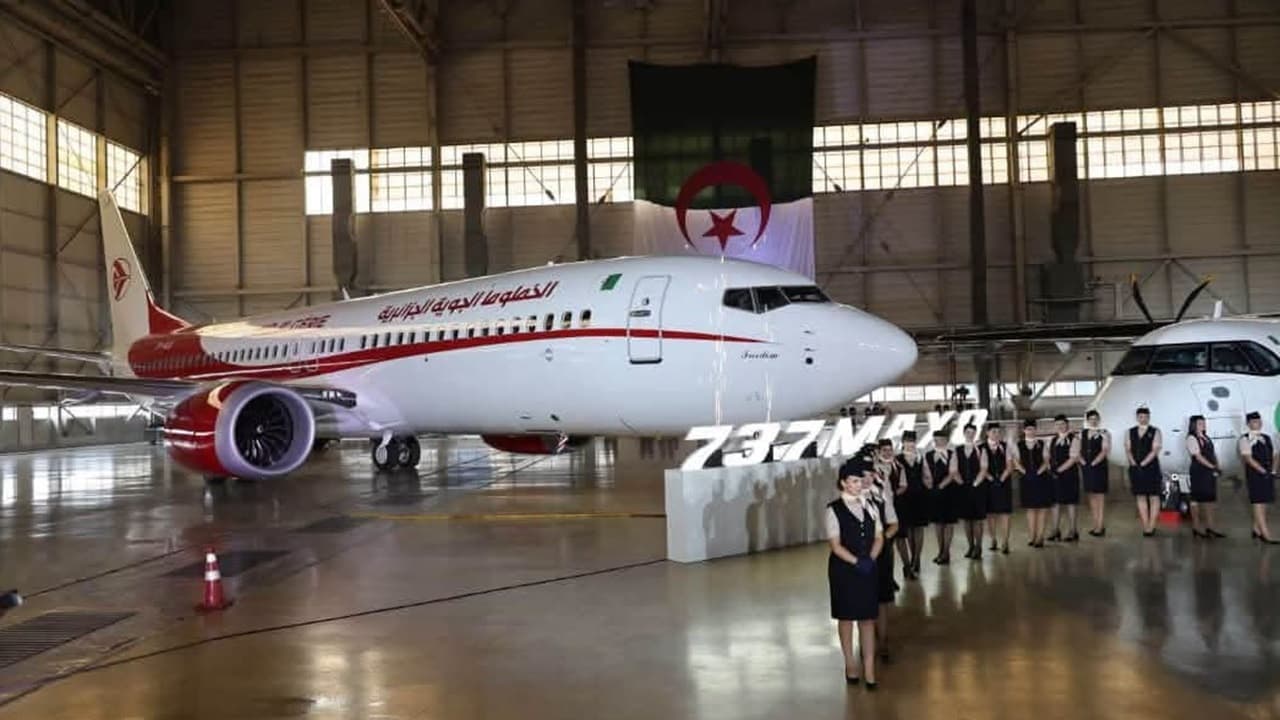
**Air Algérie has taken delivery of its first Boeing 737 MAX-8**, marking a significant step in the carrier's ambitious fleet renewal program. The aircraft, named "El Houria" (Freedom), was received during a ceremony at the airline's maintenance base in Algiers on Wednesday. Configured in a single-class layout with 189 economy seats, the MAX-8 is set to strengthen Air Algérie's medium-haul network while offering passengers a more modern cabin experience.
This delivery is the first of ten Boeing 737 MAX-8s that Air Algérie acquired through delivery slots originally allocated to Brazilian carrier GOL Linhas Aéreas, whose order was cancelled. The aircraft were already built or near completion, allowing for a relatively swift introduction. The airline's broader fleet modernization plan, announced since 2023, includes a total of 34 new aircraft: ten 737 MAX-8s, eight 737-9 MAXs, ten Airbus A330-900neo widebodies, and sixteen ATR 72-600 turboprops for its domestic subsidiary. Additionally, Air Algérie has outlined a long-term target of approximately 60 more aircraft, aiming for a fleet of over 160 planes to serve 33 domestic airports and expand its international network.
**For ATPL and ATC students**, this development is highly relevant. The introduction of the 737 MAX-8 means that future pilots and controllers will need to familiarize themselves with the aircraft's systems, performance characteristics, and operational procedures. The MAX series has been subject to significant regulatory scrutiny and design changes following the grounding in 2019, making it a key case study in aviation safety and certification. Understanding the differences between the MAX and previous 737 variants—such as the 737-800 and 737-600 that Air Algérie currently operates—is essential for type rating preparation and operational planning.
From an ATC perspective, the MAX-8's improved fuel efficiency and reduced noise footprint may influence route planning and airport slot allocation, particularly at busy hubs. The aircraft's advanced avionics and flight deck automation also align with modern air traffic management systems, emphasizing the need for controllers to stay updated on aircraft capabilities. As Air Algérie expands its fleet, students should monitor how these changes affect scheduling, maintenance, and crew training—all critical components of the aviation ecosystem.
In summary, this delivery is not just a corporate milestone but a practical example of how fleet renewal impacts training, safety, and daily operations. ATPL candidates should study the MAX's systems and history, while ATC trainees can benefit from understanding its performance data and integration into existing airspace structures.