**Aeroflot Resumes Moscow–Dubai Flights: A Case Study in Airspace Management and Route Recovery**
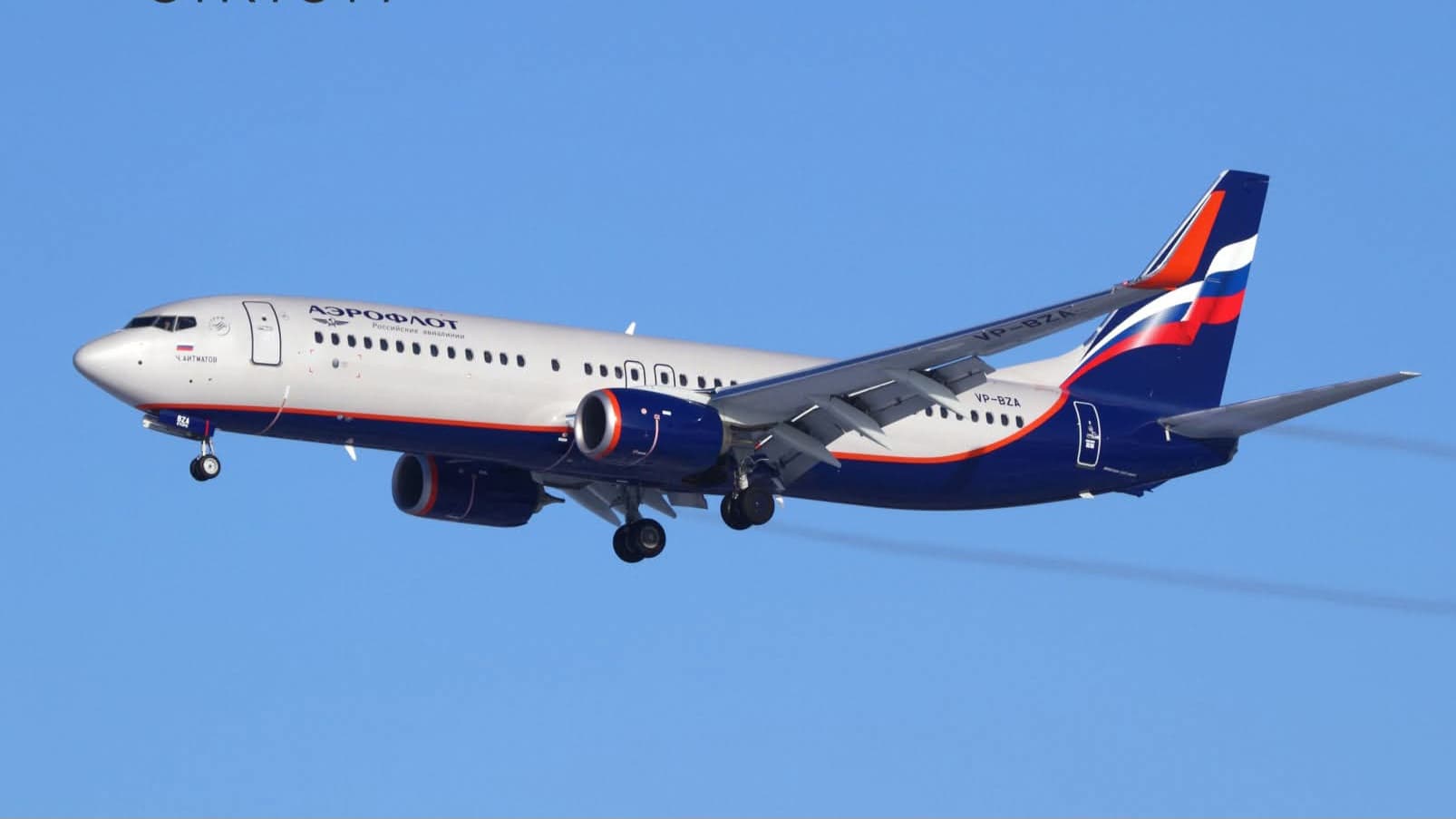
Aeroflot has announced the resumption of regular flights between Moscow Sheremetyevo (SVO) and Dubai (DXB) starting June 1, 2026, following a suspension triggered by escalating tensions in the Middle East. Initially operating one daily rotation in June, the carrier will increase to two daily flights from July 1. The route will be flown with a Boeing 737-800 configured in two classes—business and economy—reflecting a mix of leisure and business demand. This development is not just a routine network update; it offers ATPL and ATC students a real-world example of how geopolitical events directly impact flight planning, airspace restrictions, and operational recovery.
**The Operational Context: From Suspension to Gradual Reopening**
The suspension of the Moscow–Dubai corridor occurred in late February 2026, when several Middle Eastern countries partially closed their airspace amid heightened tensions involving the United States, Israel, and Iran. Russian authorities recommended that national carriers suspend ticket sales to the UAE and avoid Iranian airspace, effectively grounding the route. In April, Russia's Federal Air Transport Agency (Rosaviatsia) lifted the recommendation, allowing carriers to resume using Iranian airspace and selling tickets to the UAE. The UAE's General Civil Aviation Authority (GCAA) followed in early May, declaring a return to "normal status" for its airspace after a joint safety assessment. For students, this sequence illustrates the critical role of NOTAMs (Notices to Air Missions), AIP (Aeronautical Information Publication) updates, and real-time coordination between national authorities—all topics covered in ATPL and ATC training.
**Why This Matters for ATPL and ATC Students**
For future pilots, this case highlights the importance of understanding airspace closures, rerouting procedures, and the impact of geopolitical risks on flight planning. ATC students can analyze how controllers manage traffic flow when airspace is suddenly restricted, and how they coordinate with adjacent FIRs (Flight Information Regions) to ensure safety. The gradual ramp-up from one to two daily flights also demonstrates capacity management and slot coordination at busy airports like SVO and DXB. Additionally, the use of a Boeing 737-800 on a medium-haul international route underscores the need to know aircraft performance, fuel planning, and alternate airport considerations when flying over politically sensitive regions.
**Broader Implications for the Aviation Industry**
Aeroflot's move is part of a wider strategy to rebuild its network toward the Gulf, a vital region for Russian tourism and connecting traffic to Asia and Africa. Despite Western sanctions limiting operations to Europe and North America, the carrier is focusing on markets where demand remains strong. This trend affects global route planning and competition, as Gulf carriers like Emirates and Flydubai also adjust their schedules. For students, understanding these dynamics is essential for future roles in airline management, flight dispatch, or strategic planning.
**Conclusion**
The resumption of Moscow–Dubai flights is more than a news item—it is a practical lesson in how aviation adapts to geopolitical turbulence. ATPL and ATC candidates should study this case to grasp the interplay between international regulations, airspace management, and operational decision-making. As the industry continues to face similar challenges, such knowledge will be invaluable.