**A new economic regulation contract for ADP**
On August 3, 2026, Aéroports de Paris (ADP) announced an agreement with the French State on the future economic regulation contract (CRE) covering 2027-2034. This eight-year framework, which must still receive the formal opinion of the transport regulator (ART) before being signed by the end of the year, sets the conditions for airport fee evolution, traffic and operating cost assumptions, and a regulated investment program now calibrated at 8.2 billion euros. ADP's CEO called it a "major step" before the contract takes effect on January 1, 2027.
**SCARA's criticism: a "non-concluded" consultation**
The Syndicat des compagnies aériennes autonomes (SCARA), which represents independent airlines, immediately contested the agreement. After a first public consultation document was released in late 2025, ADP published a new one that SCARA says "only marginally modifies traffic and investment assumptions" without addressing the union's core concerns. SCARA accuses ADP of "making point-to-point European, domestic, and overseas routes finance a strategy that does not directly concern them," namely the reinforcement of the Roissy-CDG hub and the attraction of international long-haul lines. The economic advisory committees gave broadly favorable opinions on the eight-year duration but expressed "reserves" on the tariff trajectory, according to the ART.
**Widely contrasting fee increases behind the average**
Over 2027-2034, ADP plans an average increase of regulated fees of +2.1 points above the harmonized consumer price index (HICP), peaking at +4.0 points in 2027-2028, then easing to +1.5 points from 2029 to 2034. However, SCARA stresses that "this average masks considerable disparities from one route category to another." Excluding inflation, passenger fees would rise by 34% on domestic routes, 21% on European and overseas routes, but only 16% on international routes. Including inflation, these increases reach 48%, 34%, and 28% respectively. The ART considers the average evolution "moderate" but insists on the need to "rebalance risk sharing" and better document traffic and cost assumptions.
**Hub priority in investments and tariffs**
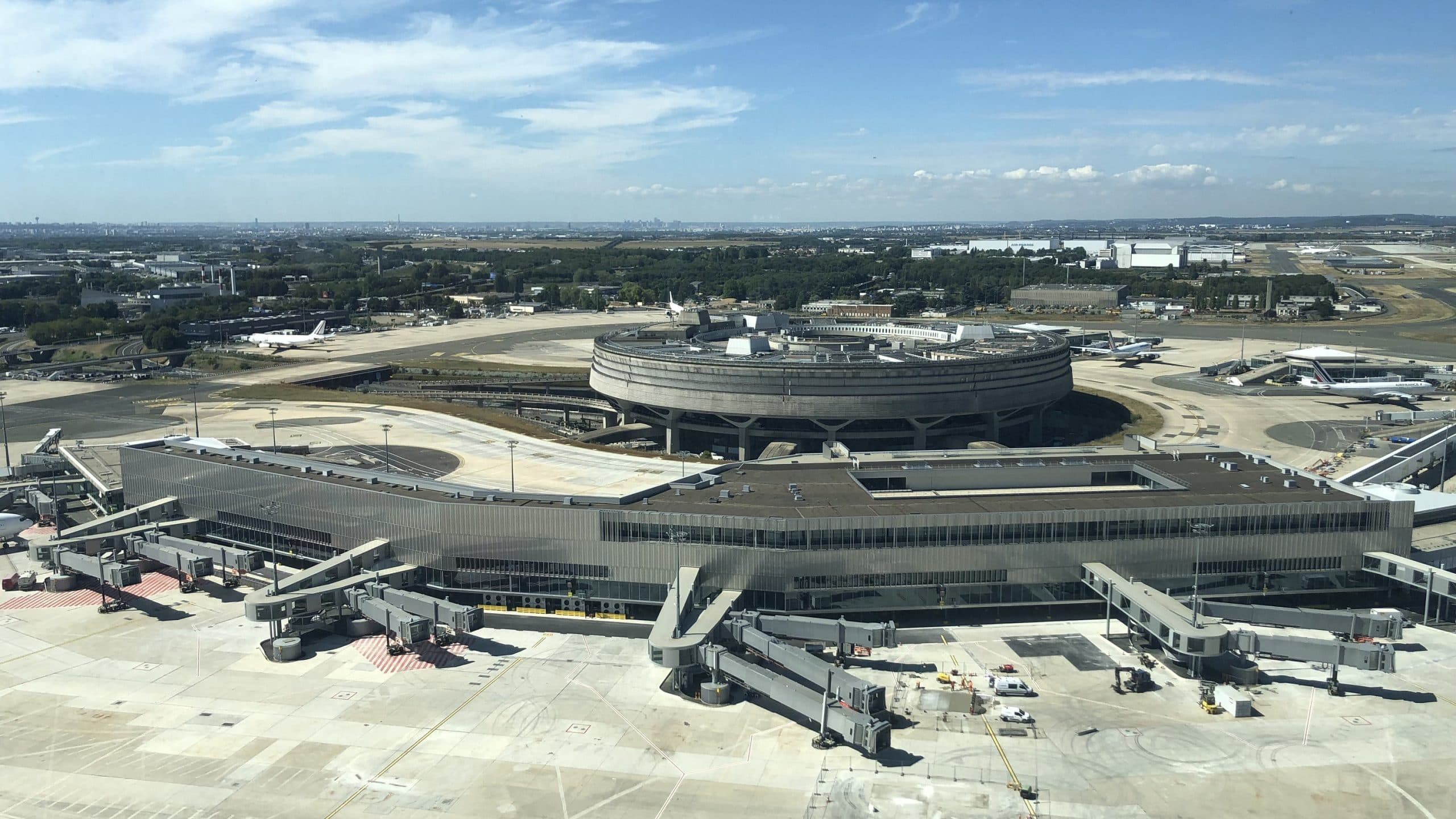
The regulated investment program, which aims to add 18 million passenger capacity at Paris-CDG and Paris-Orly by 2034, concentrates a significant share on the hub. According to SCARA, "nearly 40%" of the 8.2 billion euros will go to CDG's transfer infrastructure, versus 20% for point-to-point links, with the remainder for common investments. This imbalance is striking because "transfer passengers represent only 29.5% of total traffic at ADP platforms," the union insists. The tariff system also strengthens the rebate for transfer passengers, increasing it from 40% to 60% on certain categories, leading to lower fees for connections while point-to-point routes face the steepest hikes.
**Accumulation of charges: TSBA and CDG Express**
Beyond the CRE, SCARA highlights an accumulation of levies on French and European routes. A DGAC study from November 2025 showed that the solidarity tax on airline tickets (TSBA) increase in March 2025 — +4.77 euros per economy ticket and +3.70 euros per business ticket on intra-European flights — contributed to France's declining attractiveness for airlines. Additionally, from April 2027, a "special CDG Express contribution" will be collected from each passenger departing or arriving at Roissy-CDG to fund the intermodal link with the future express train to Paris Est station. Its exact amount is not yet known but will be capped at 1.40 euros per traveler. SCARA warns that "this addition of taxes and fees raises the operating cost of French and European routes and directly weighs on the attractiveness of the France destination."
The union calls on the State to "re-examine its proposal" so that "each user of ADP airport platforms pays the fair price for the services rendered, without financing strategic choices that do not concern them." It demands an "alternative investment scenario" compatible with limiting fee increases to inflation for point-to-point European, domestic, and overseas routes. The ART must still deliver its formal opinion on the contract project.