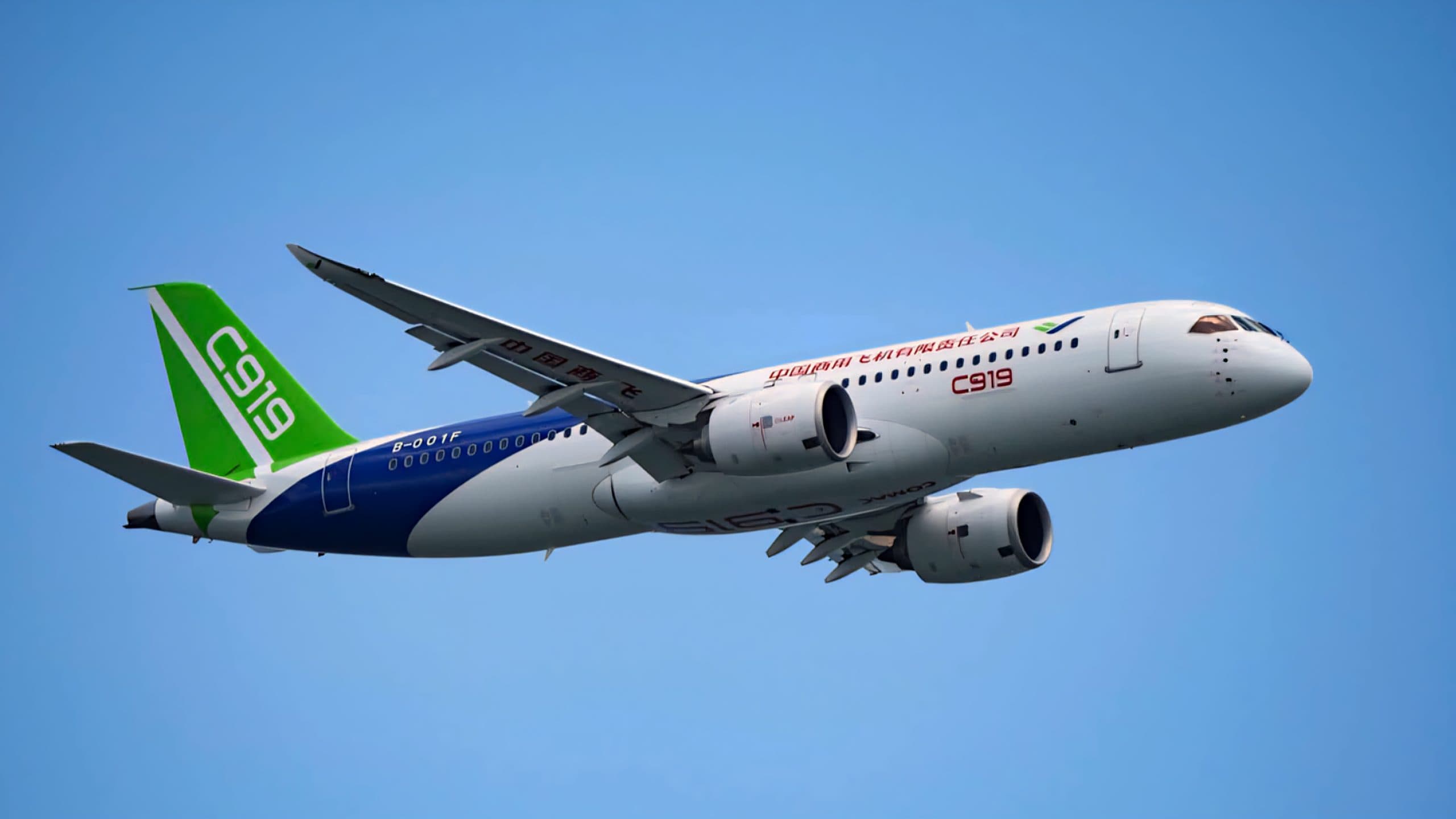
**Un jalon critique de maintenance pour le C919**
China Southern Airlines a achevé fin mai le premier C‑check sur un C919 de COMAC, une visite de maintenance lourde de trois semaines mobilisant environ 6 000 heures de travail et des inspections point par point. Durant cette opération, certaines pièces structurelles ou de systèmes ont été démontées du fuselage pour être testées ou remplacées en atelier. Ce contrôle périodique, généralement effectué tous les 18 à 24 mois ou après 4 000 à 6 000 heures/cycles de vol, est le deuxième plus lourd dans la hiérarchie A‑B‑C‑D, derrière la visite D. Pour le C919, entré en service commercial en mai 2023 et dont la flotte opérationnelle compte désormais 37 appareils répartis entre China Eastern, Air China et China Southern, ces premiers C‑checks constituent un test crucial de durabilité à long terme et de qualité de fabrication.
**L’EASA en observation**
L’Agence européenne de la sécurité aérienne (EASA) suit de près ces opérations de maintenance dans le cadre de son évaluation continue du C919 en vue d’une certification européenne. L’EASA a déjà effectué ses propres vols de validation à Shanghai, avec des pilotes d’essai examinant le comportement de l’appareil en configurations dégradées, par mauvais temps ou lors de manœuvres extrêmes. L’agence a prévenu que la certification complète pourrait prendre trois à six ans, compte tenu de l’ampleur des vérifications requises pour un nouvel avion hors du duopole Airbus‑Boeing. Les résultats des C‑checks – notamment la découverte ou non de défauts majeurs – seront transmis à l’EASA via l’Administration de l’aviation civile de Chine (CAAC) et COMAC, fournissant des données cruciales sur la fiabilité réelle de l’appareil et ses besoins de maintenance.
**Pourquoi cela importe aux étudiants ATPL et ATC**
Pour les candidats ATPL, comprendre le processus de C‑check est essentiel pour de futurs rôles en exploitation aérienne, planification de maintenance et gestion de flotte. Le parcours du C919 illustre aussi les défis de l’introduction d’un nouveau type d’avion sur un marché dominé par des acteurs établis. Les étudiants ATC doivent noter que les nouveaux types d’avions apportent des caractéristiques de performance et des procédures opérationnelles uniques, pouvant affecter la gestion du trafic, surtout si le C919 entre un jour dans l’espace aérien européen. Le calendrier de certification de l’EASA – et les données issues de ces opérations de maintenance – façonneront la manière dont les contrôleurs interagiront avec cet appareil à l’avenir.
**Un contexte industriel plus large**
L’ambition de COMAC de concurrencer les familles A320neo et 737 MAX repose sur la démonstration que le C919 peut supporter une utilisation intensive sans problèmes de maintenance inattendus. Les premiers C‑checks sont un indicateur clé : s’ils se déroulent sans accroc, ils renforcent l’argument de COMAC sur la maturité de l’appareil et soutiennent sa stratégie d’exportation. À l’inverse, toute découverte significative pourrait retarder la certification et éroder la confiance. Pour les professionnels de l’aviation, c’est une étude de cas concrète sur la manière dont les données de maintenance influencent directement les décisions réglementaires et l’accès au marché.
**Conclusion**
Les premiers C‑checks du C919 sont bien plus qu’une maintenance de routine : ils représentent un jalon stratégique dans la quête de la Chine pour devenir un acteur mondial de l’aérospatiale. Pour les étudiants en formation de pilote ou de contrôleur, suivre cette histoire offre un aperçu des interactions entre maintenance, certification et politique aéronautique internationale.