Boeing 757-300: FAA mandates fuselage frame crack inspections
A new airworthiness directive requires Boeing 757-300 operators to carry out recurring checks on upper fuselage structures to spot fatigue cracks.
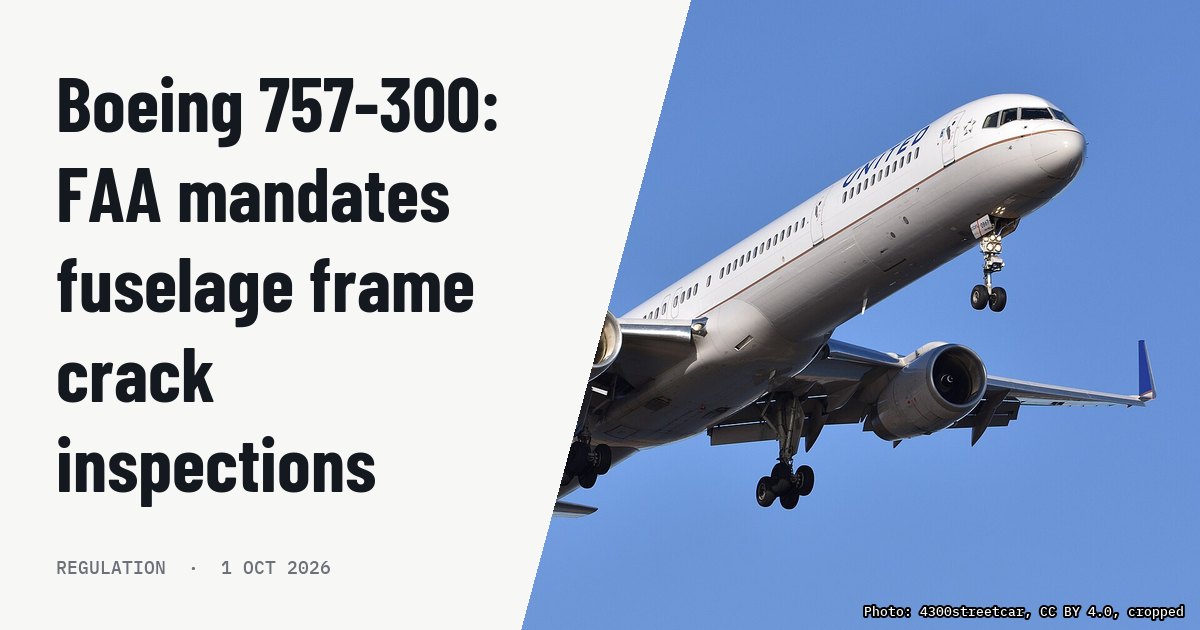
The Federal Aviation Administration (FAA) has adopted a new airworthiness directive covering all Boeing Model 757-300 airplanes to resolve an unsafe condition.
This regulatory action stems from an evaluation of crack growth. The technical findings revealed that existing maintenance planning data (MPD) along with supplemental structural inspection program (SSIP) procedures fail to offer sufficient opportunities to uncover cracking. The vulnerability involves fuselage frame splices, particularly in upper structural frames where the highest fastener interfaces with the fail-safe chord.
Under the new requirements, airlines must carry out either an inspection or a maintenance record review to identify previous structural repairs. Furthermore, carriers must conduct recurring examinations targeting those specific frame locations around that top fastener to detect any crack formation, followed by relevant on-condition corrective steps.
Why it matters for your training
Understanding structural directives helps flight crews appreciate the regulatory and engineering oversight that keeps older or high-cycle airframes safe for everyday airline operations.
Sources
Article rewritten with the help of AI from the cited sources.